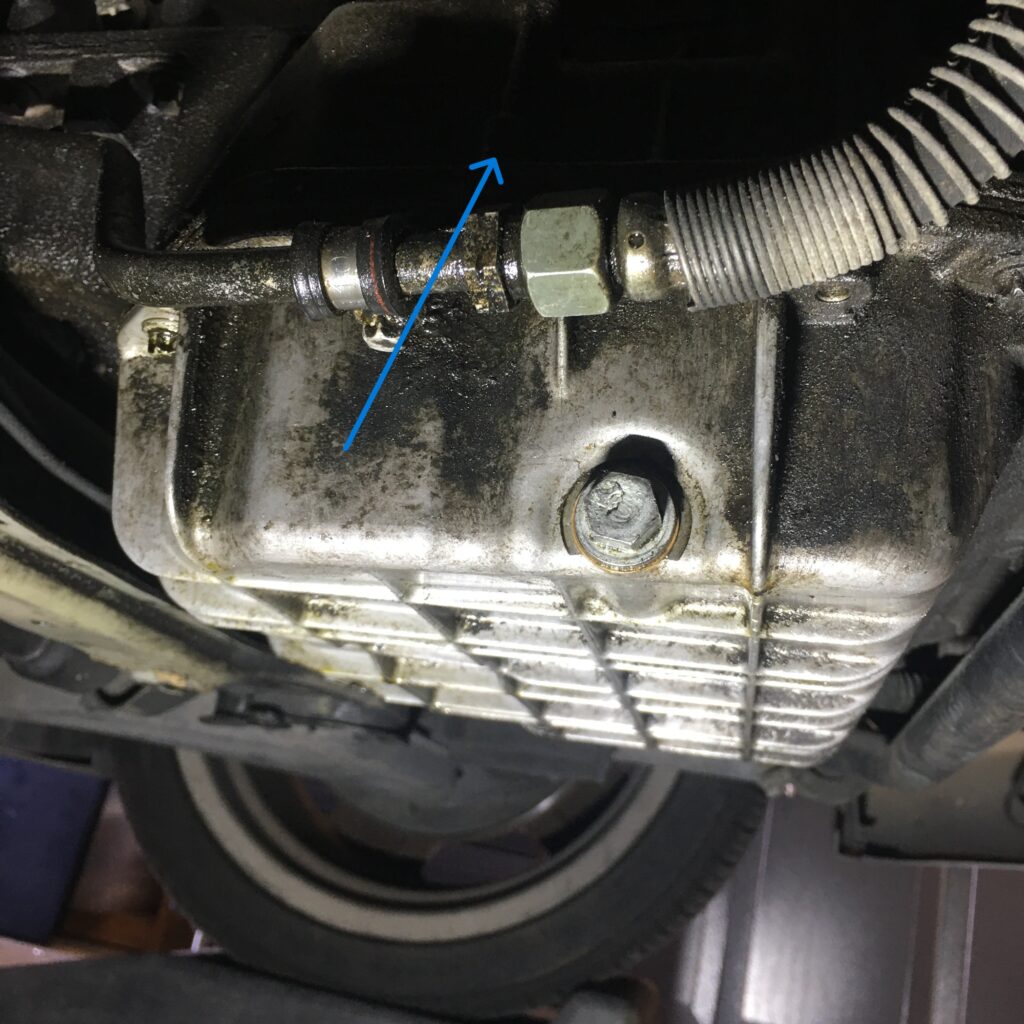
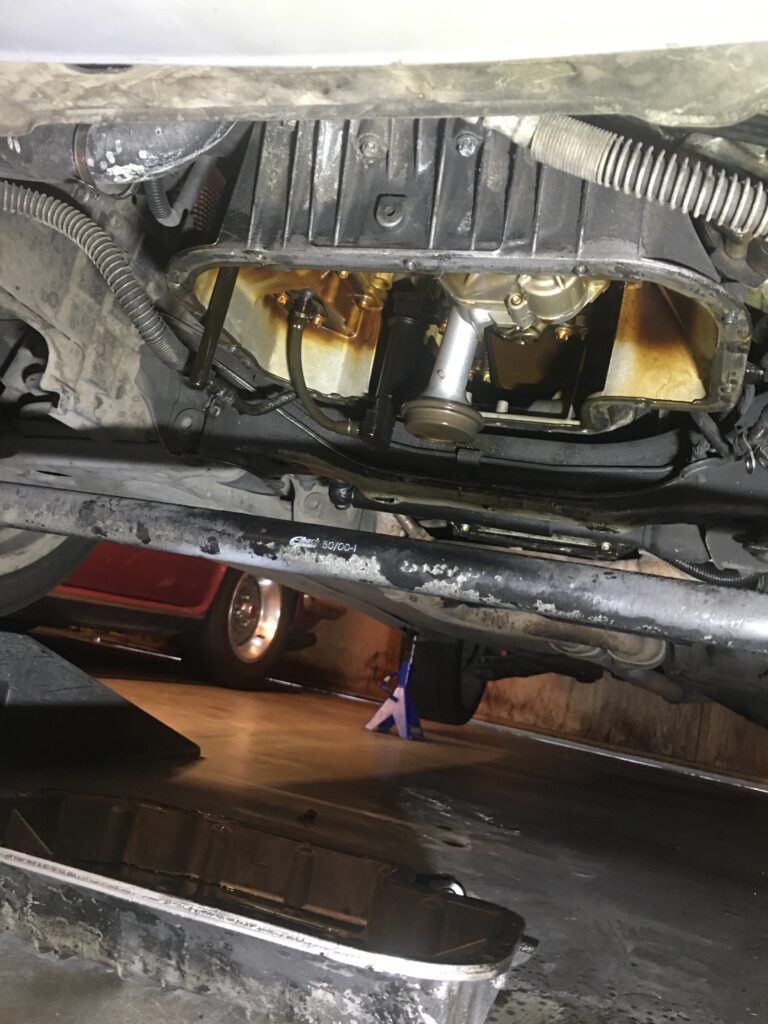
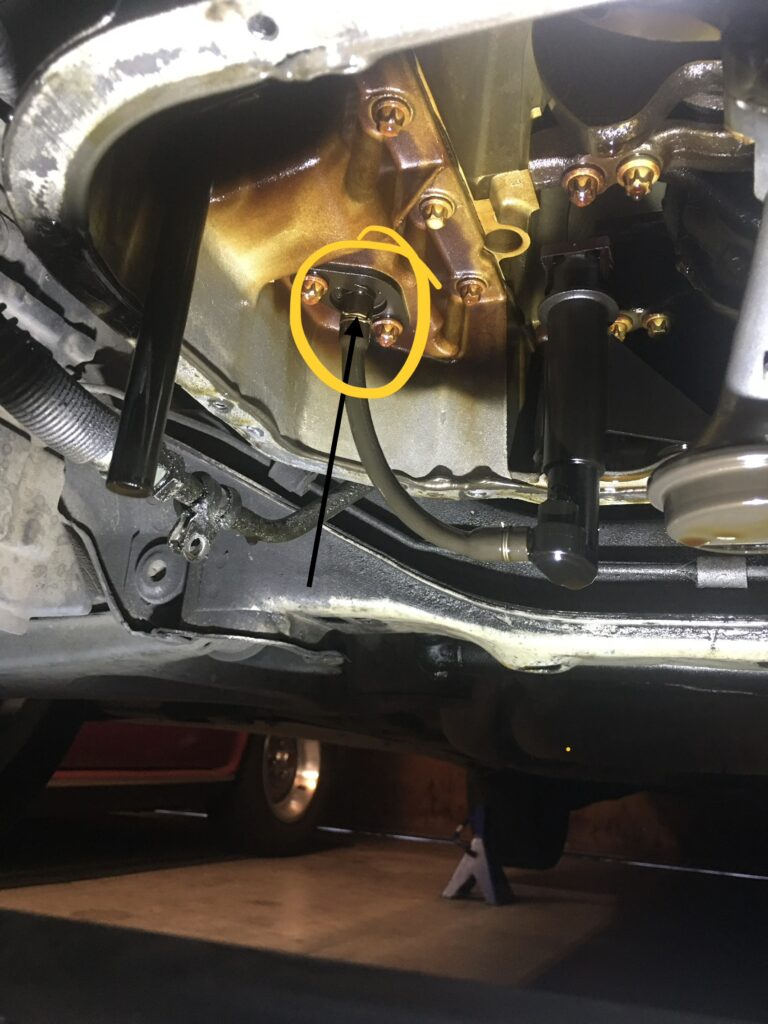
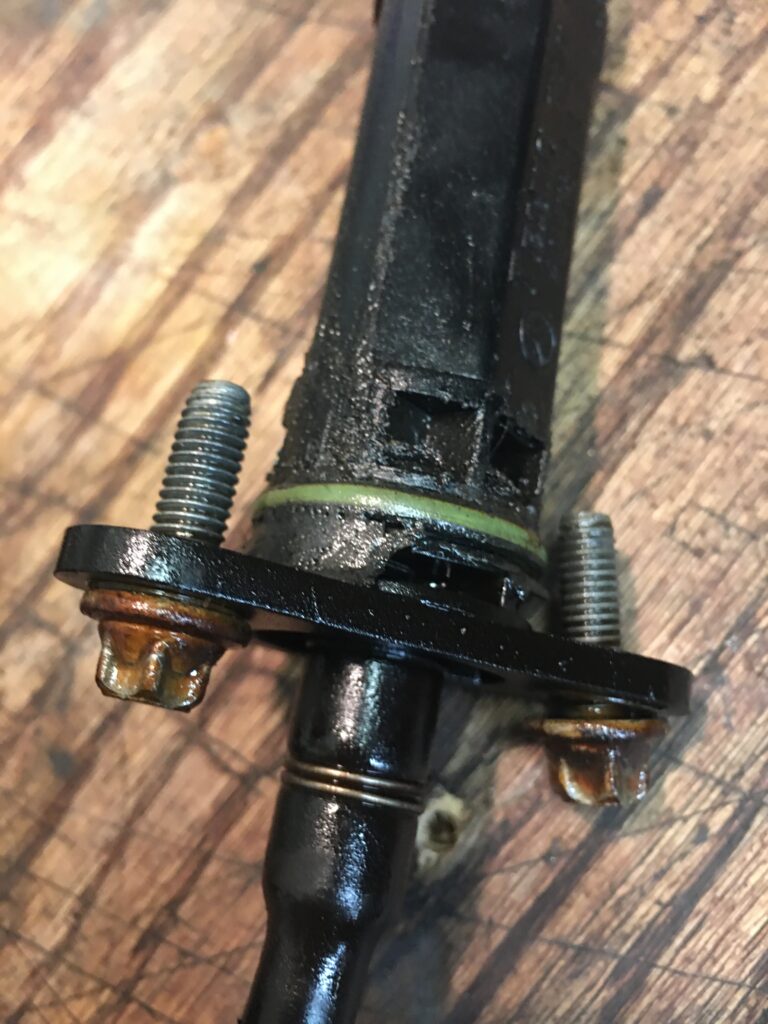
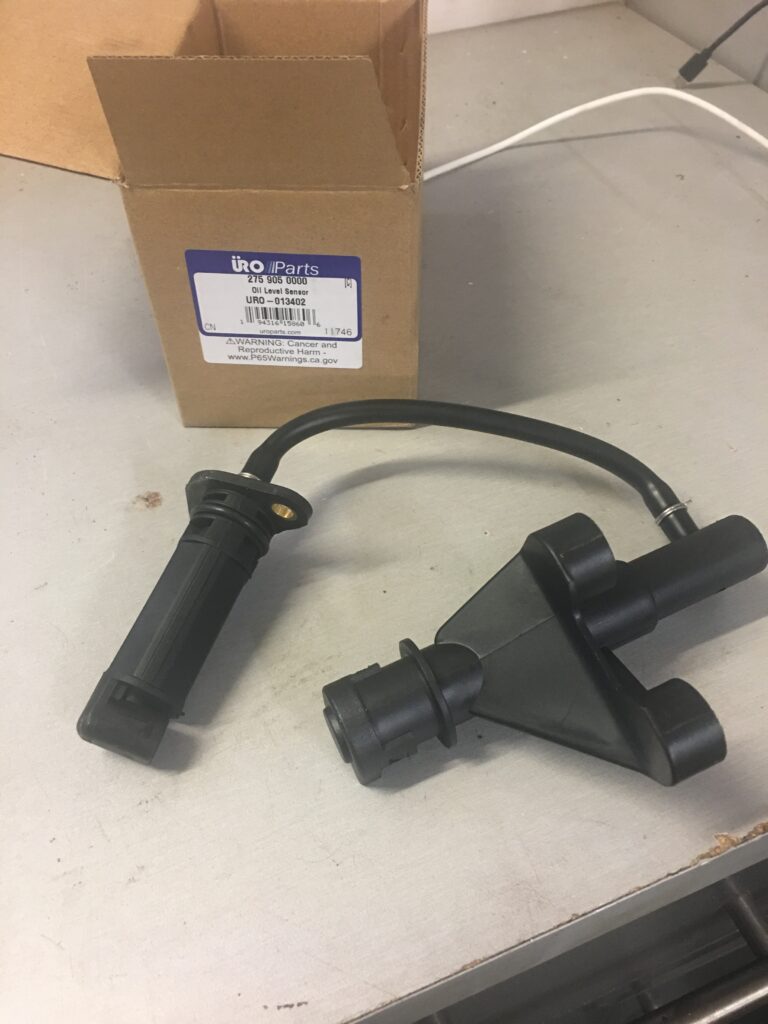
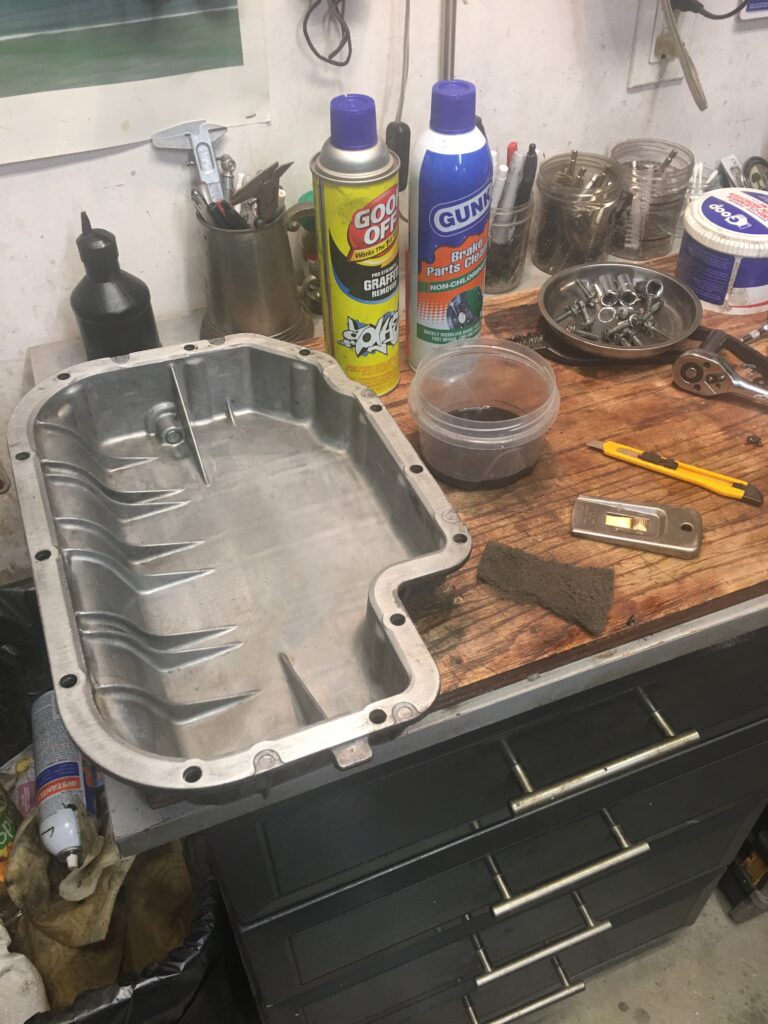
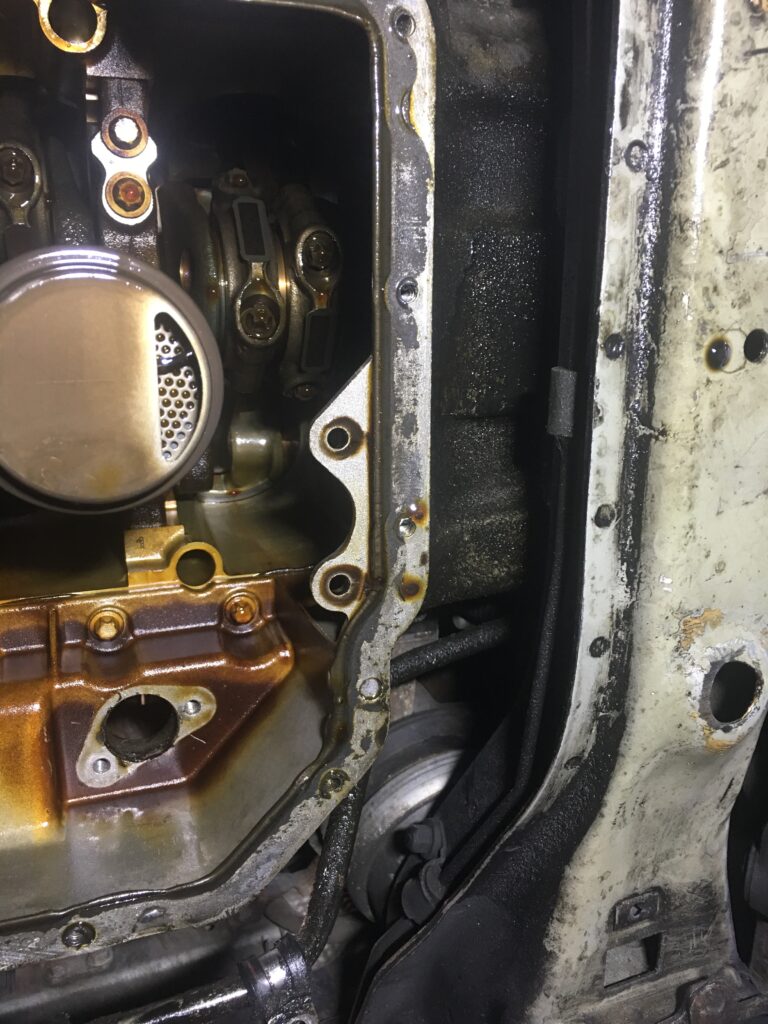
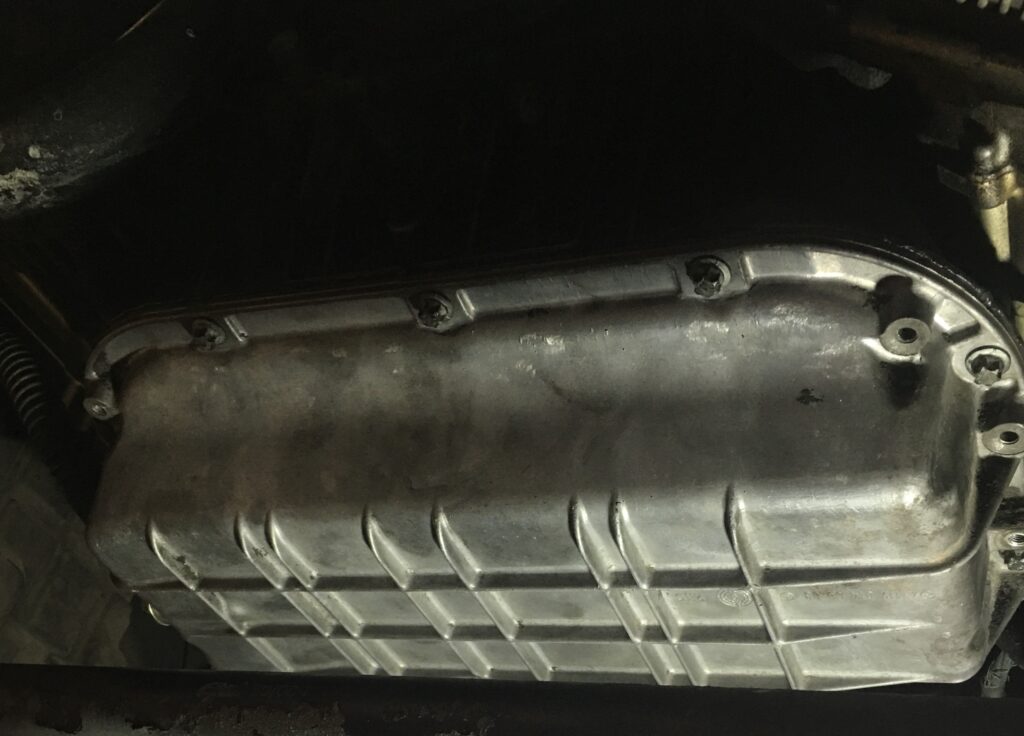
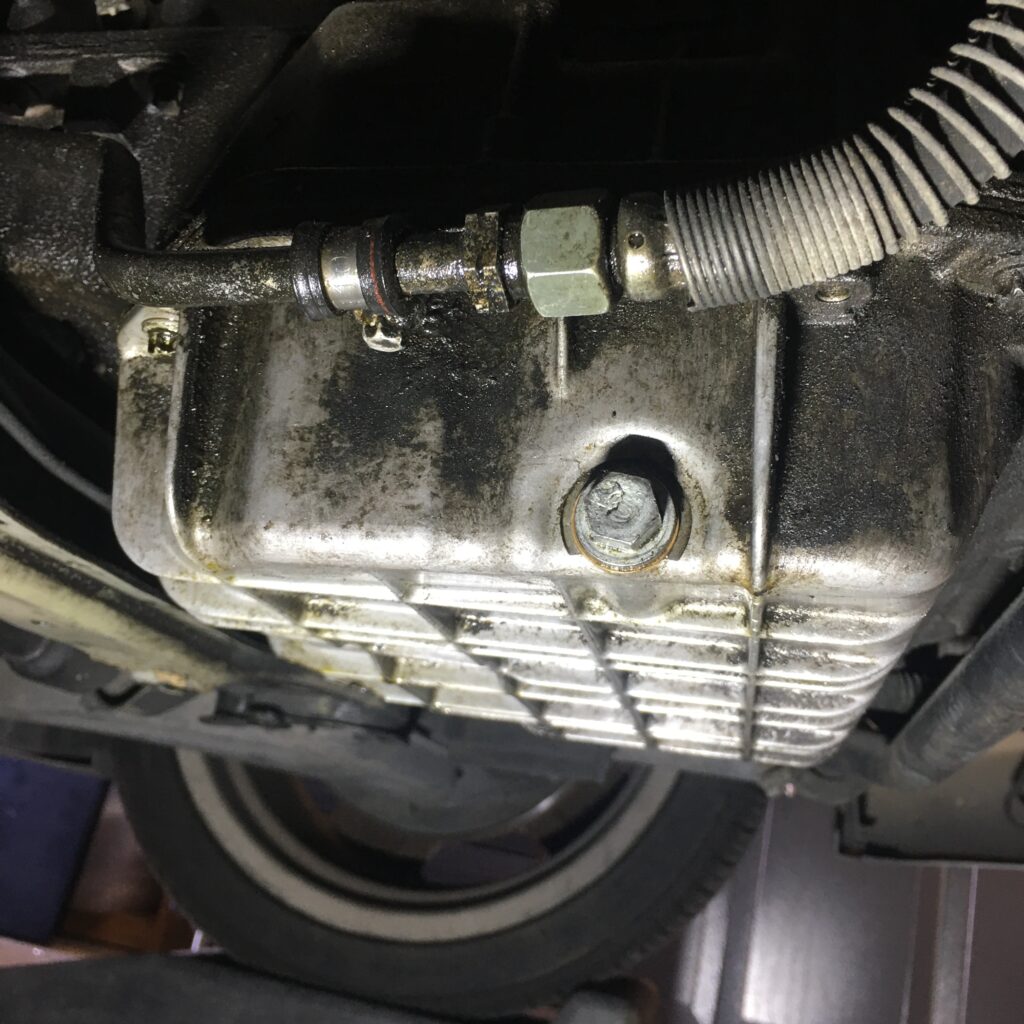
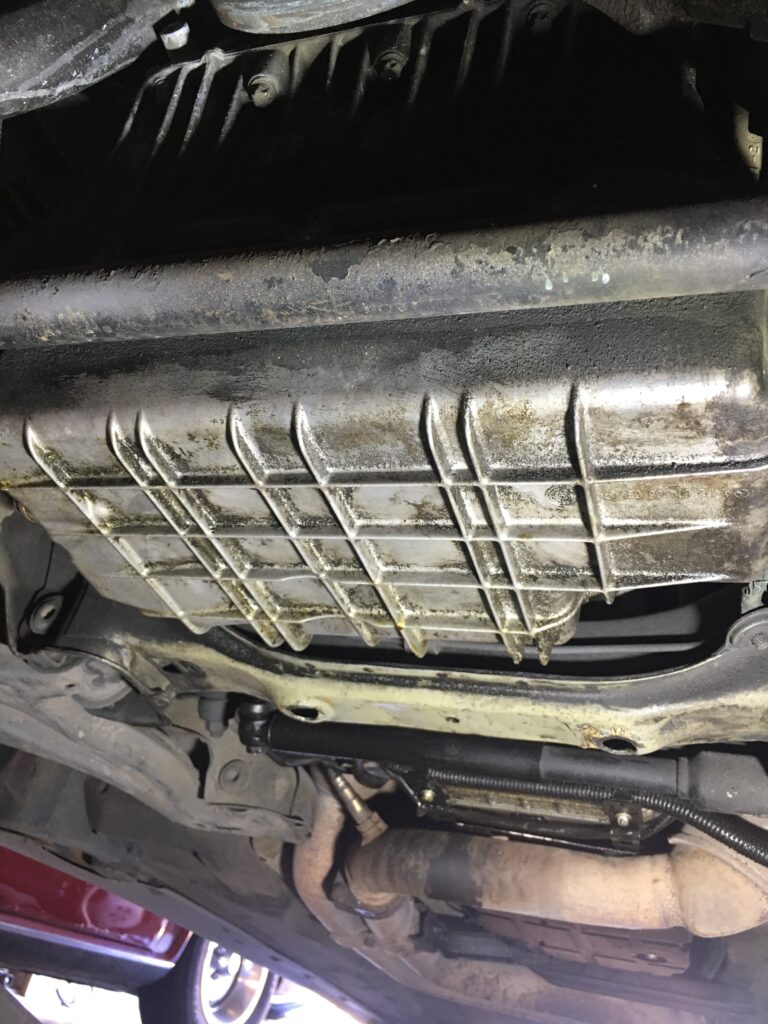
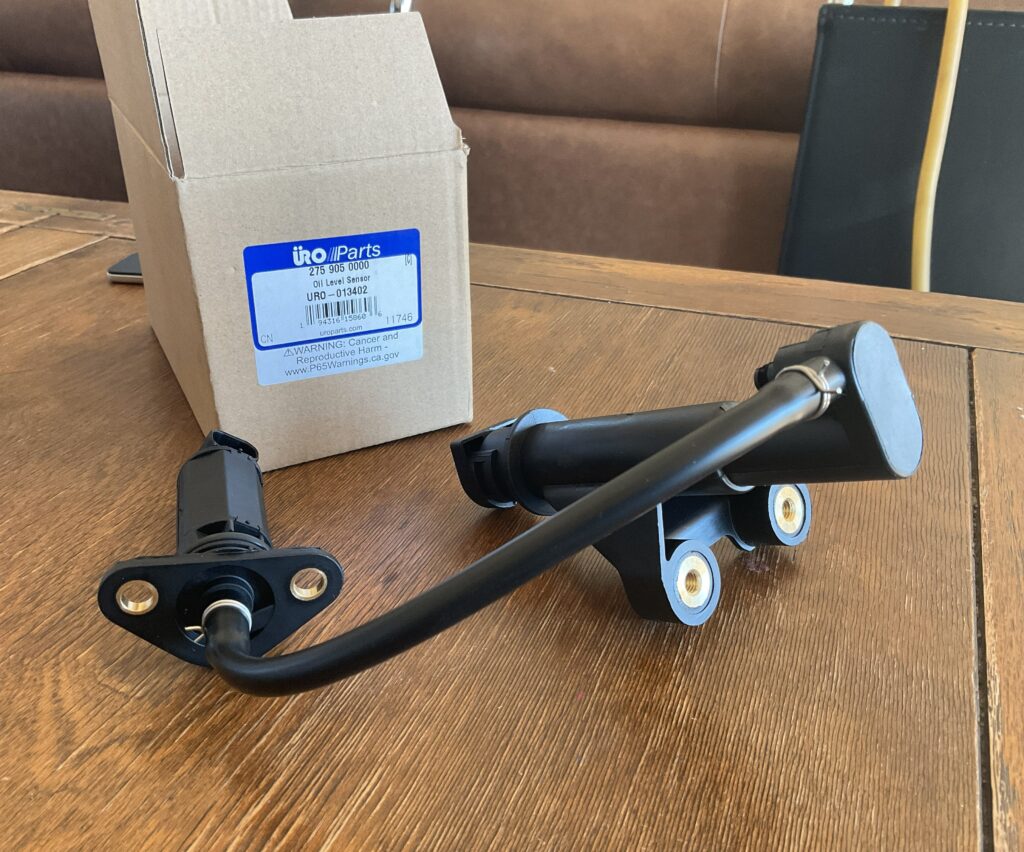
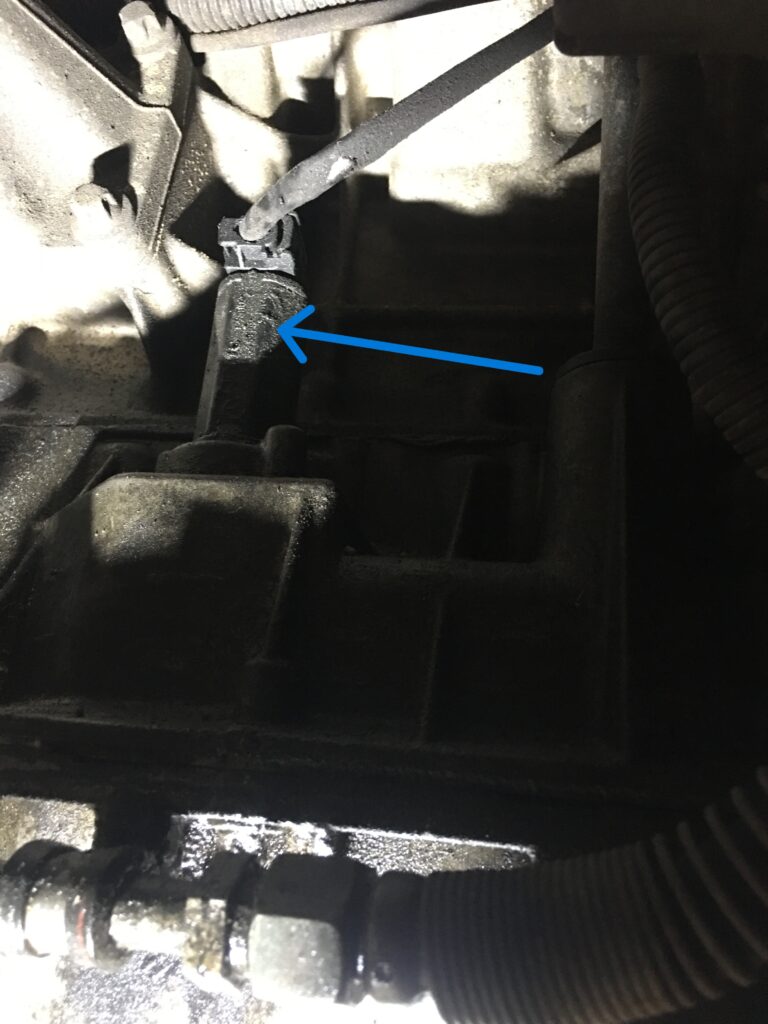
The oil sensor quit working a few months ago. I would have let it go since I check my oil regularly, but in my pursuit of leaks it became clear that the sensor was a problem. These engines have an upper and lower oil pan, both cast aluminum. The oil sensor is bolted to the upper oil pan and is accessed by removing the lower pan. Part of the oil sensor protrudes through the upper oil pan in a little flat area, approximately above the drain plug, where a connector plugs it into the ECU. The rubber o-ring was no longer doing its job of keeping the oil inside the engine.
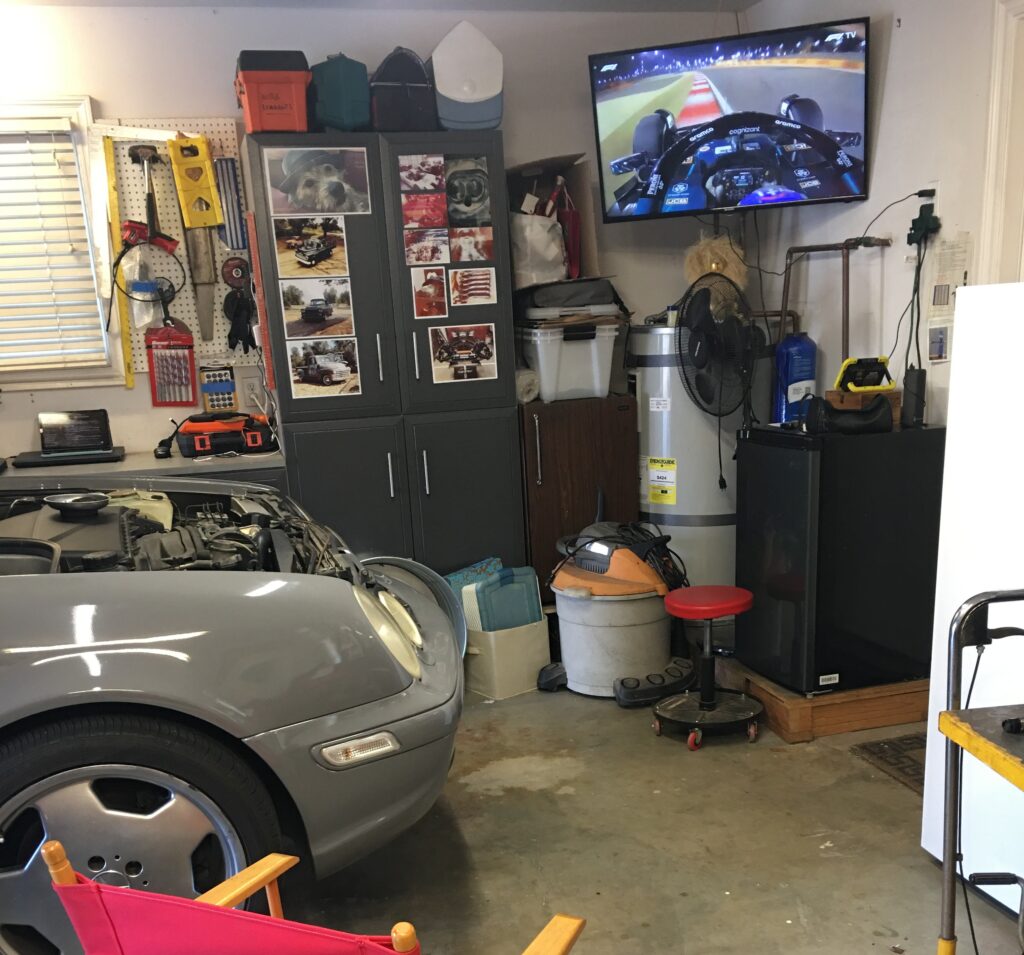
It was a mistake to have F1 on the TV, apparently I can no longer multi-taskThe sensor shows itself here, above the drain plugWhere the plug connects sensor to ECU
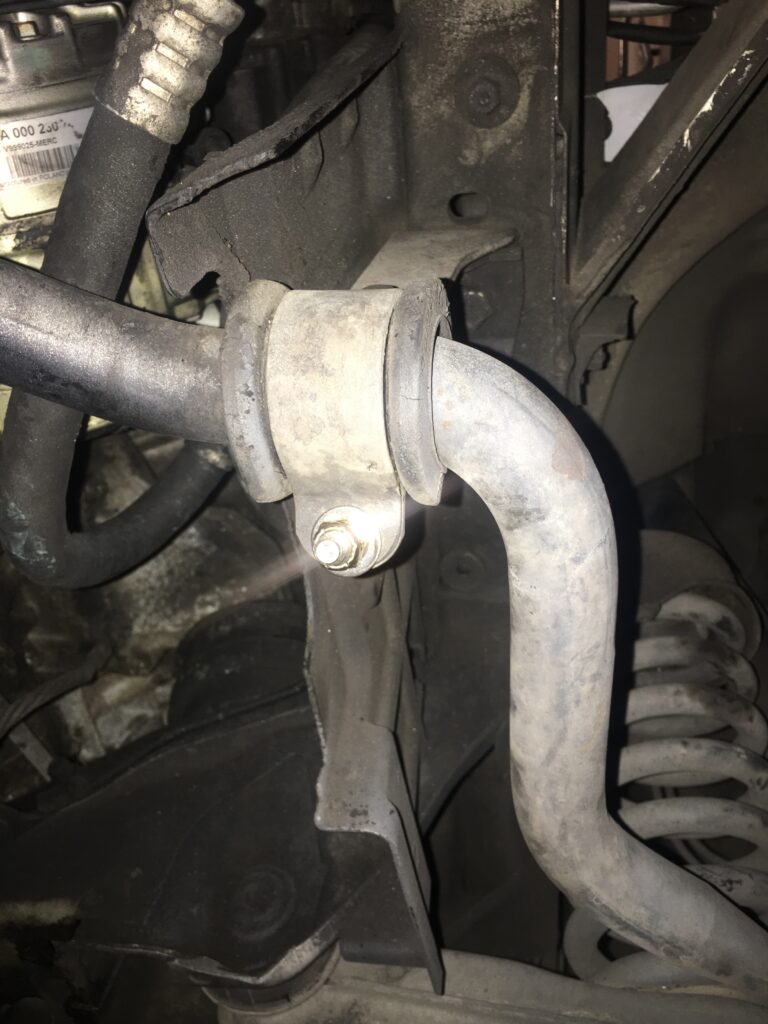
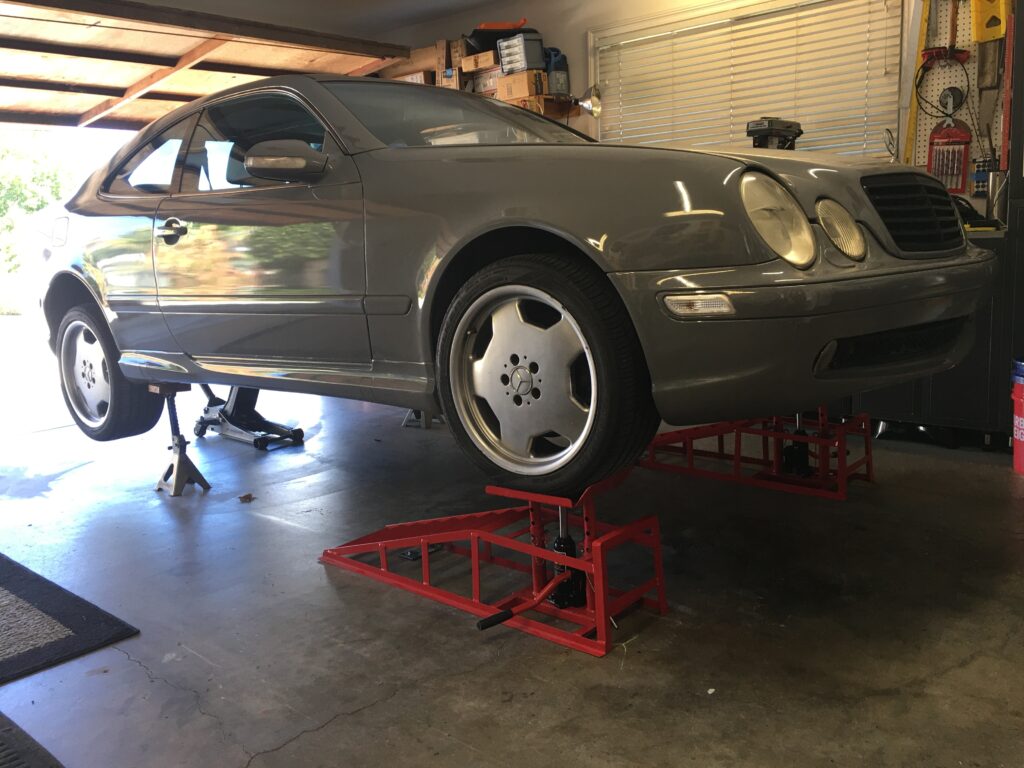
I used the E10 socket to remove a dozen bolts securing the lower oil pan, plus two more holding pipes to the pan. Then I removed the two brackets holding the sway bar in position under the oil pan, allowing it to swing down and out of the way. As long as the front wheels are at the same height there should be no tension on the sway bar, and it doesn’t matter if they’re on a ramp like mine or hanging freely.
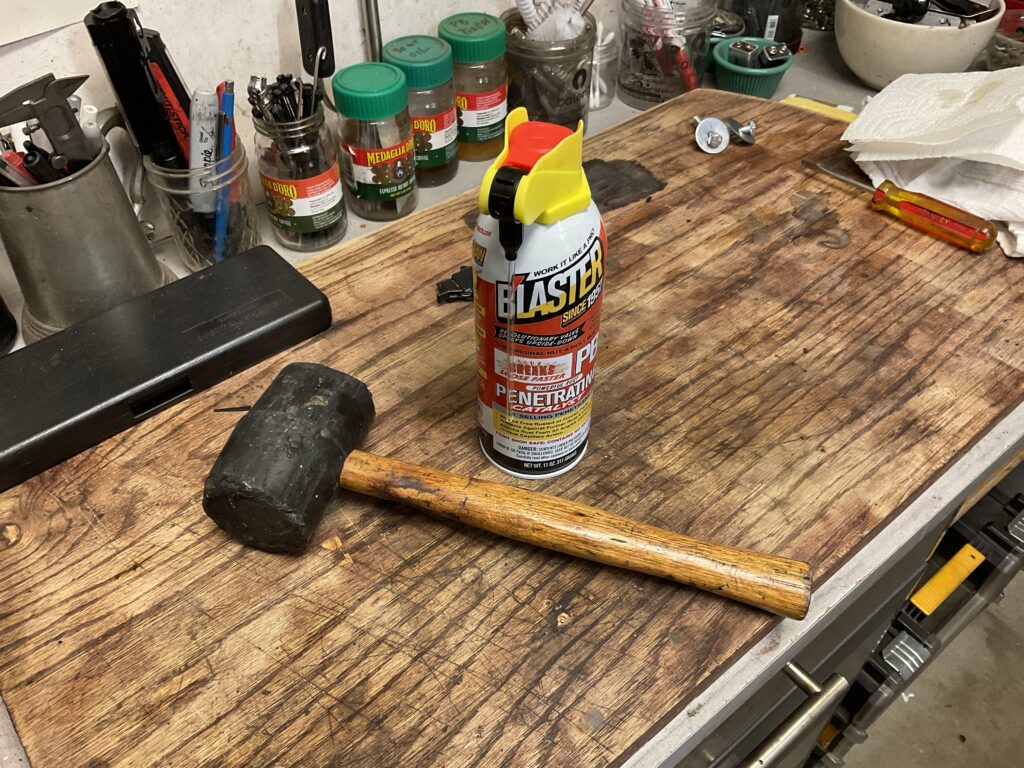
The pan felt like it was welded on, and wouldn’t budge even with several hard raps with the rubber mallet, side to side and front to back. I sprayed PB Blaster liberally all the way around where the two pans join and let it sit overnight. The next morning, a couple more knocks with the mallet broke the seal loose.
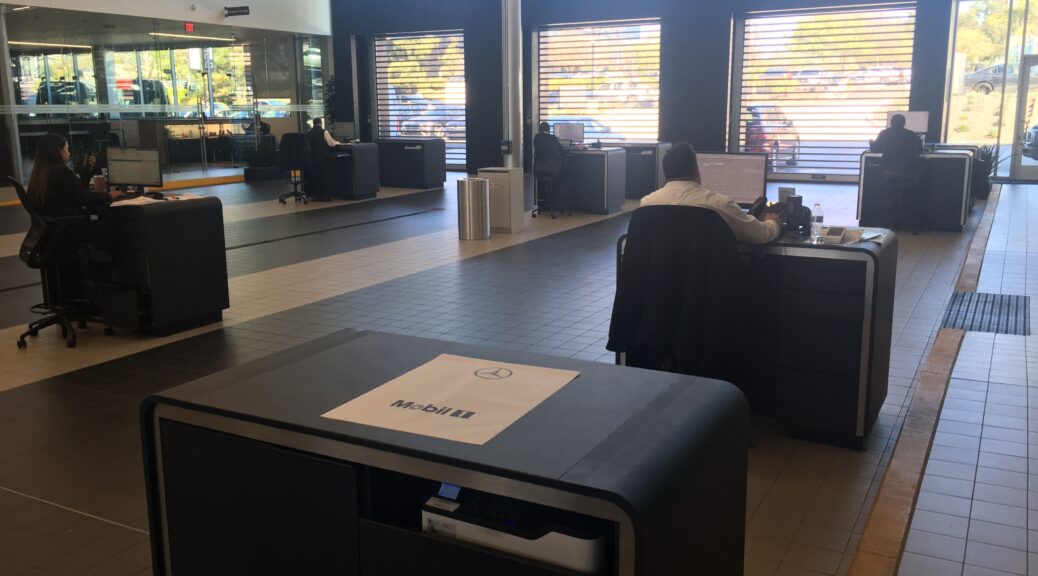
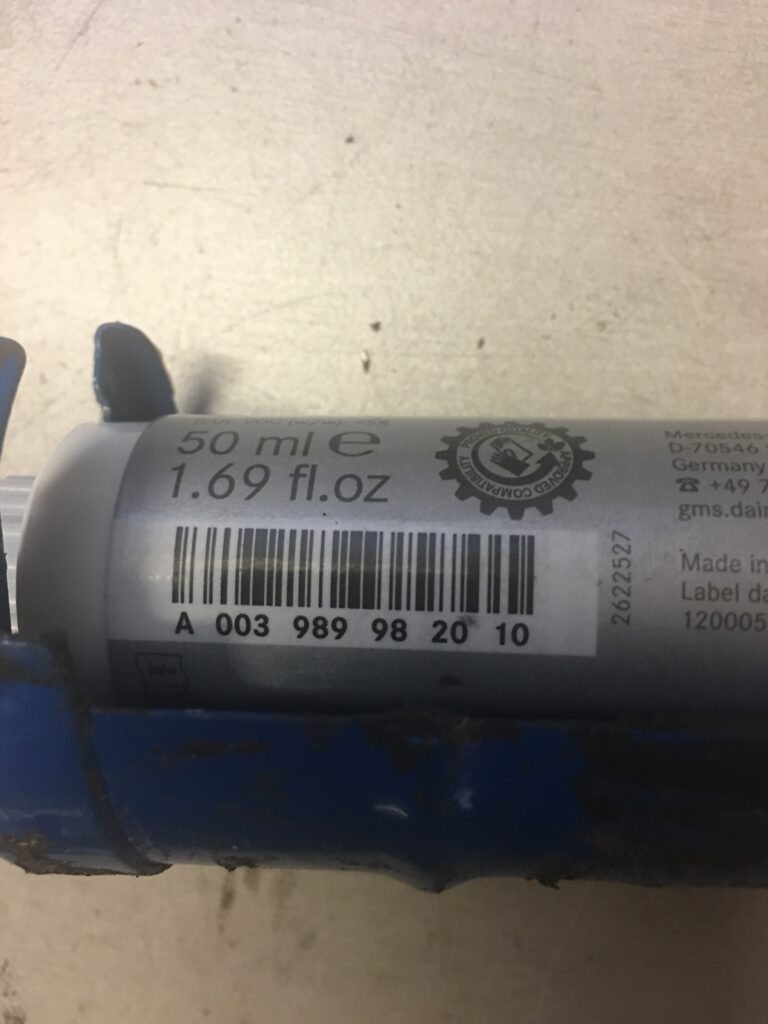
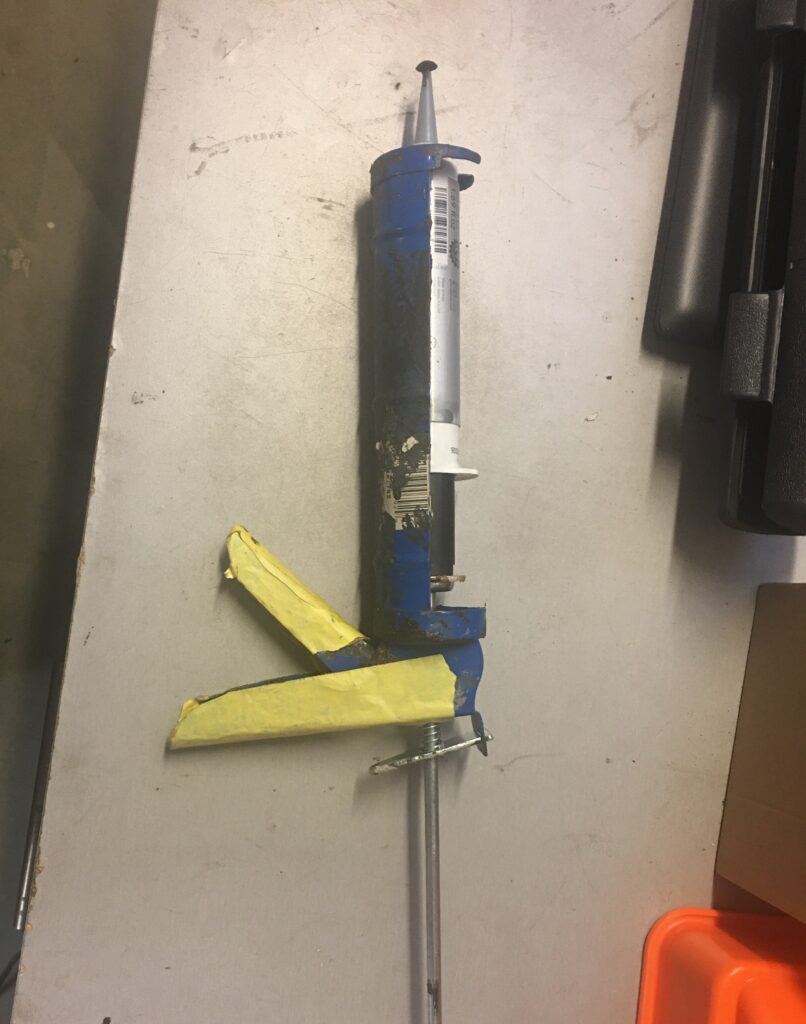
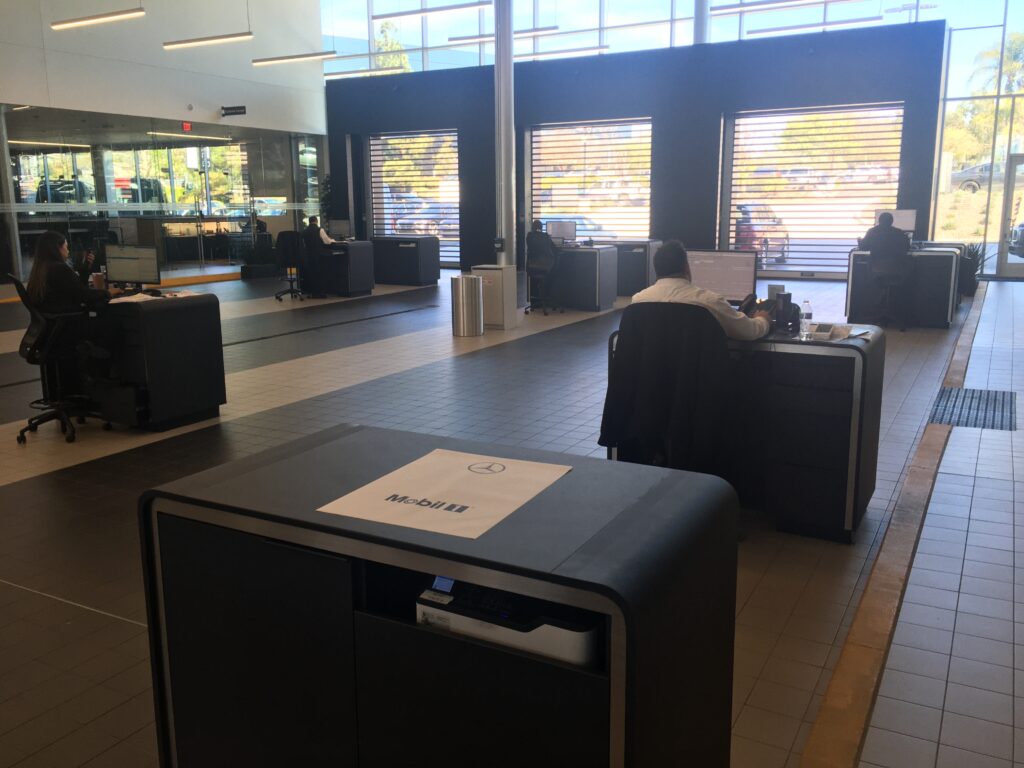
Essential toolsSway bar bracketFinally separatedOil level sensor goes through upper pan hereO-ring clearly not doing its jobNew sensor, attached by four E10 boltsLower pan cleaned up using razor blades, abrasive pad, and chemicalsThe upper pan also should be spotlessTake care cleaning the mating surfaces, I relied on Goof-Off and engine degreaser to loosen the old sealant then with a light touch used the straight razor blade and some Scotch-brite to ready the upper and lower pans for fresh sealant. Pans bolted back togetherThese ramps give me 20 inches of elbow room… less than $200The Mercedes sealant, Permatex Ultra-grey also does the jobThe bead should be a couple millimeters wide. The service drop-off area at Mercedes dealership. The sealant was twice as expensive here.
I do like the local Mercedes dealership, and they had taken care of our ML diesel before we swapped it for the Subaru Outback. It’s a great looking facility and of course the new cars on display are marvelous, but parts and service tend to be pricey. On the plus side, the parts department is totally open and honest about where the parts can be found at lower prices.
Now, with the oil filter housing and oil pan leaks addressed, hopefully the CLK55 engine is buttoned up for a few more miles. Next on the agenda is the transmission oil pan which seems to have sprung a leak.
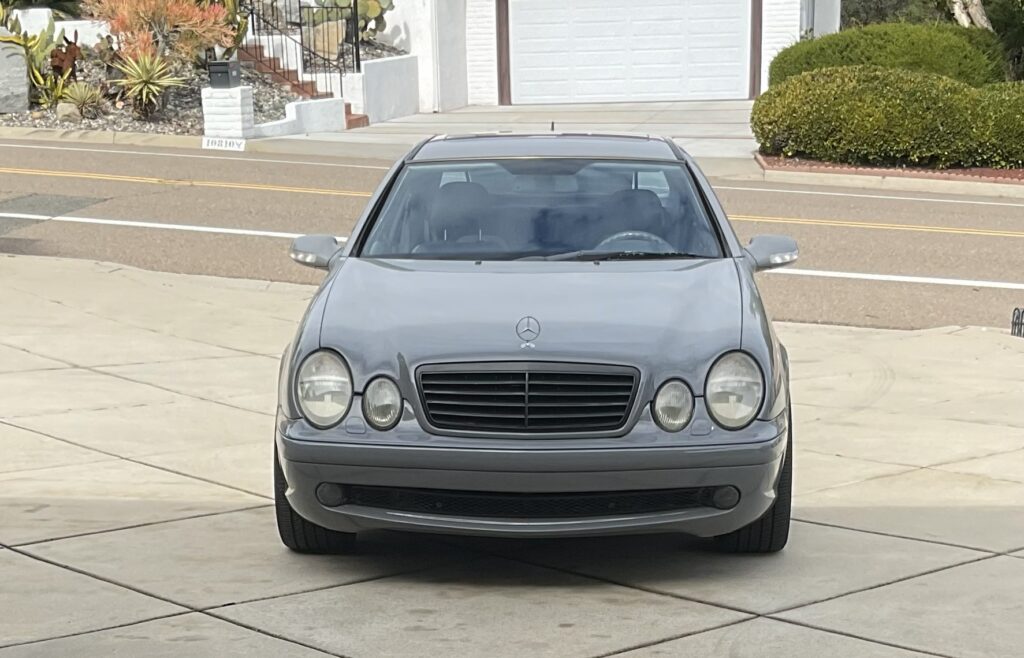
The 2001 CLK55 engine sprung a leak, evidenced one morning by a visible oil puddle behind the right front wheel. It was a narrow lake of oil, probably no more than a couple tablespoons, originating near the rear of the engine. After putting the car on ramps I crawled under to take a look.
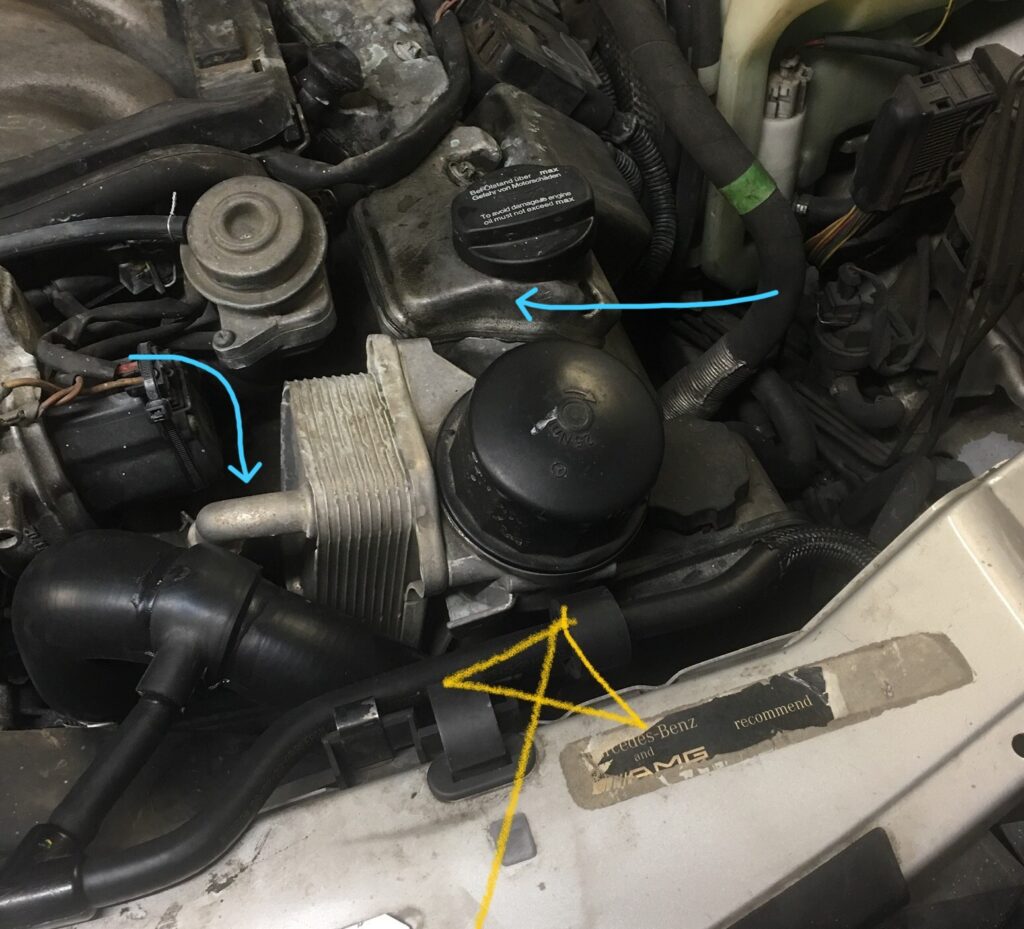
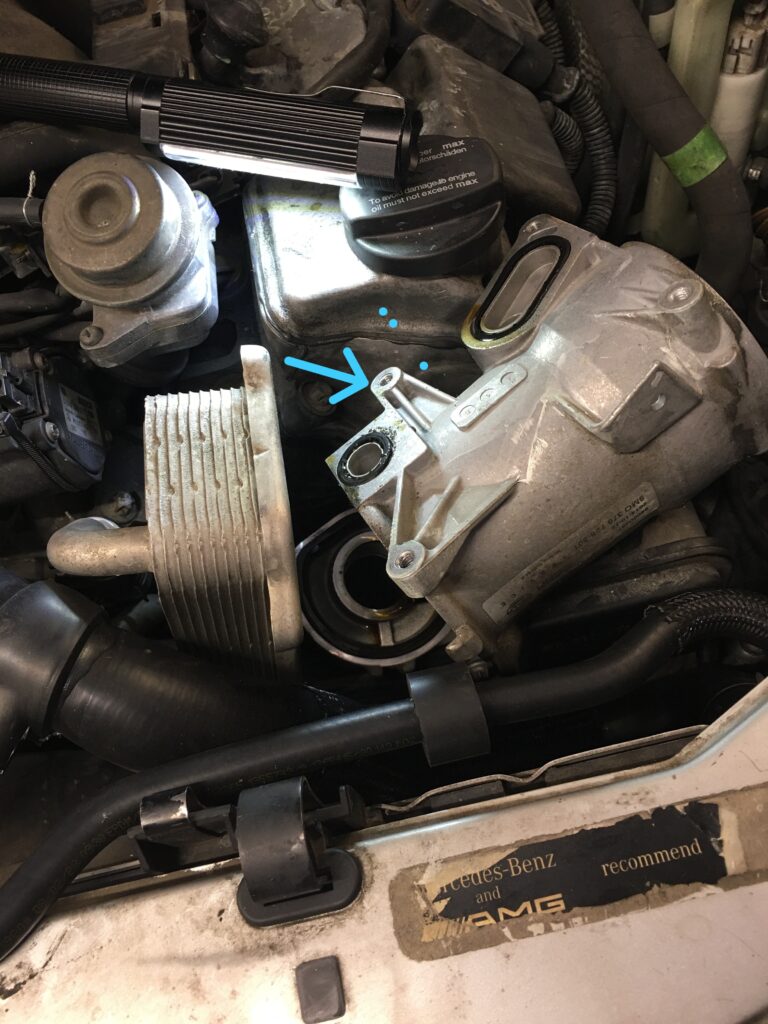
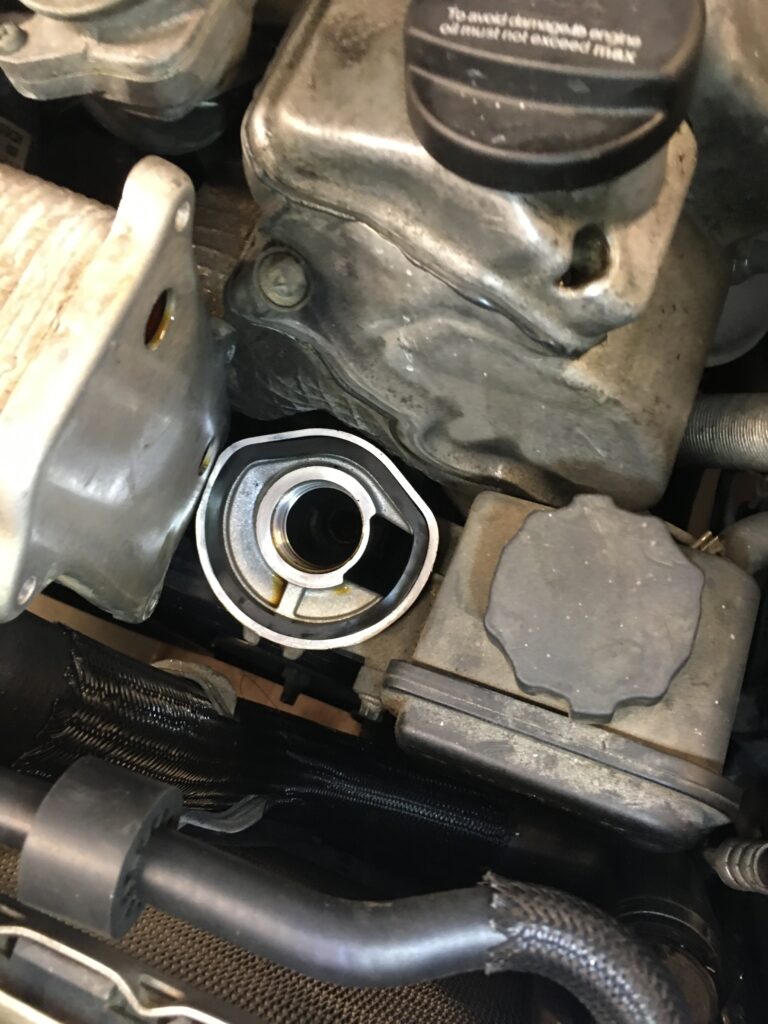
The evidenceThe likely sources, the oil filter housing and the oil filler cap. Yellow is pointing at filter housing that must be removed
I uploaded the photo and had a bit of consultation with ChatGPT as to the possible source of the leak, and eventually discovered there was oil on the front of the engine below the oil filter housing, and a bit near the oil filler cap.
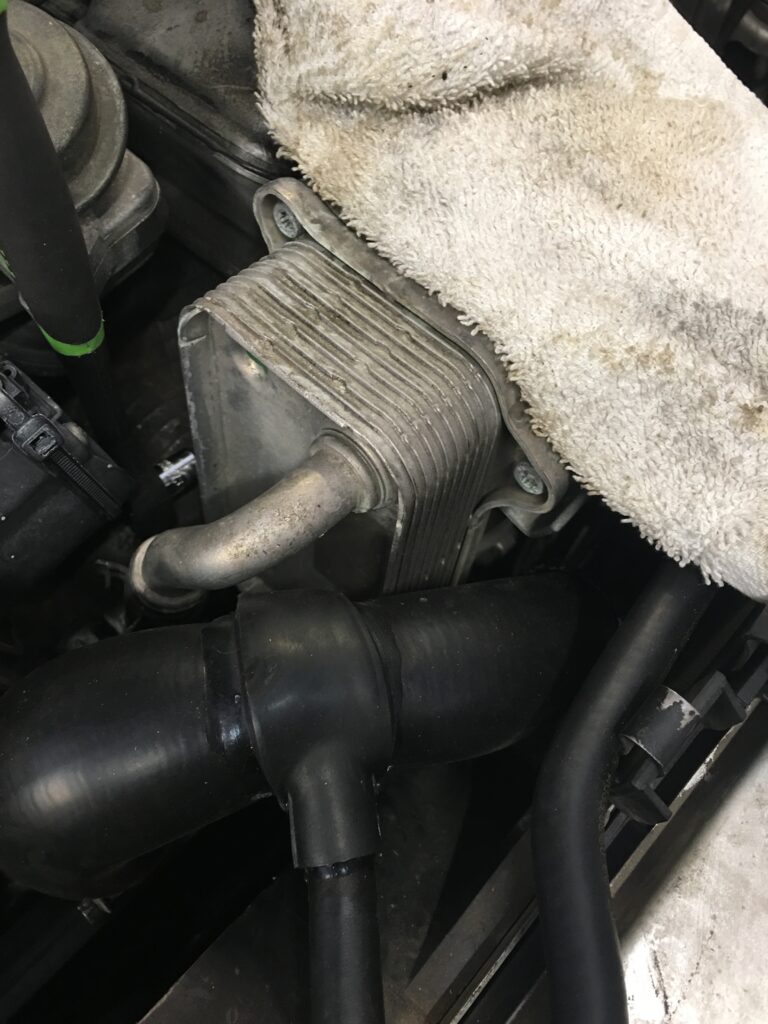
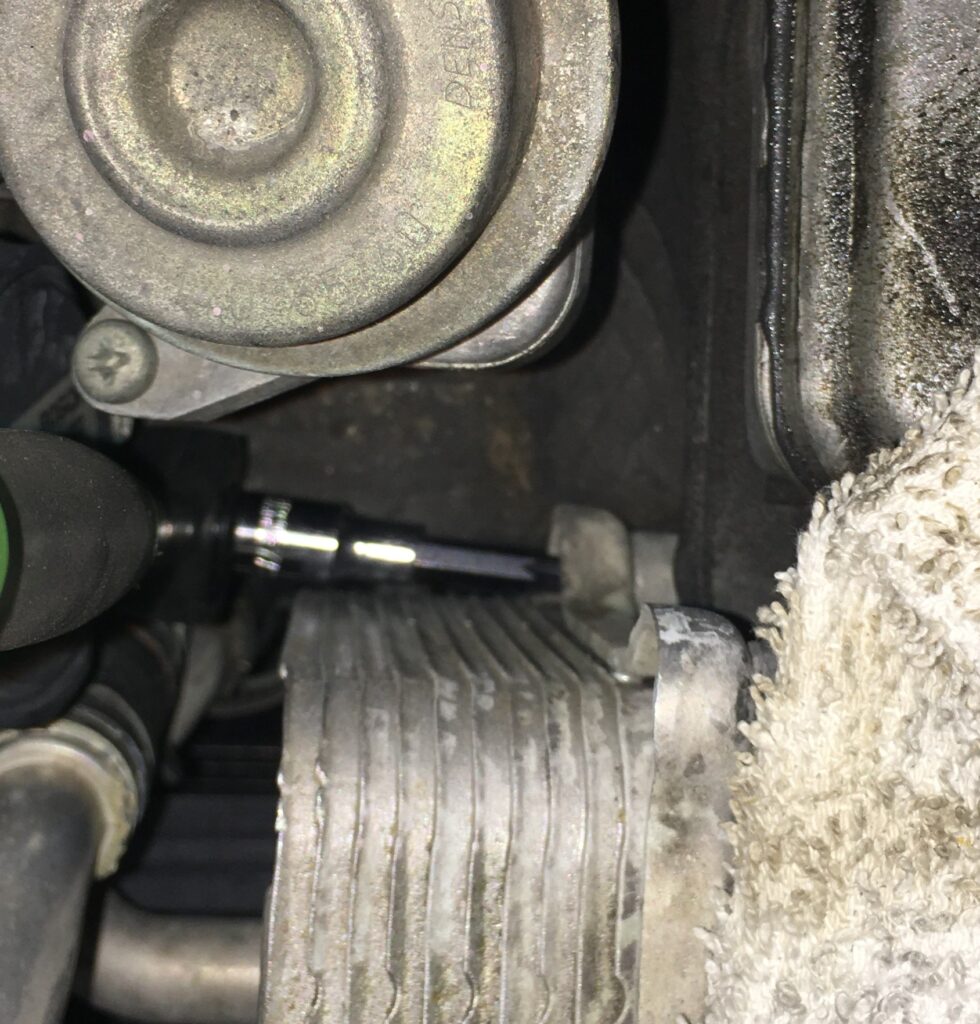
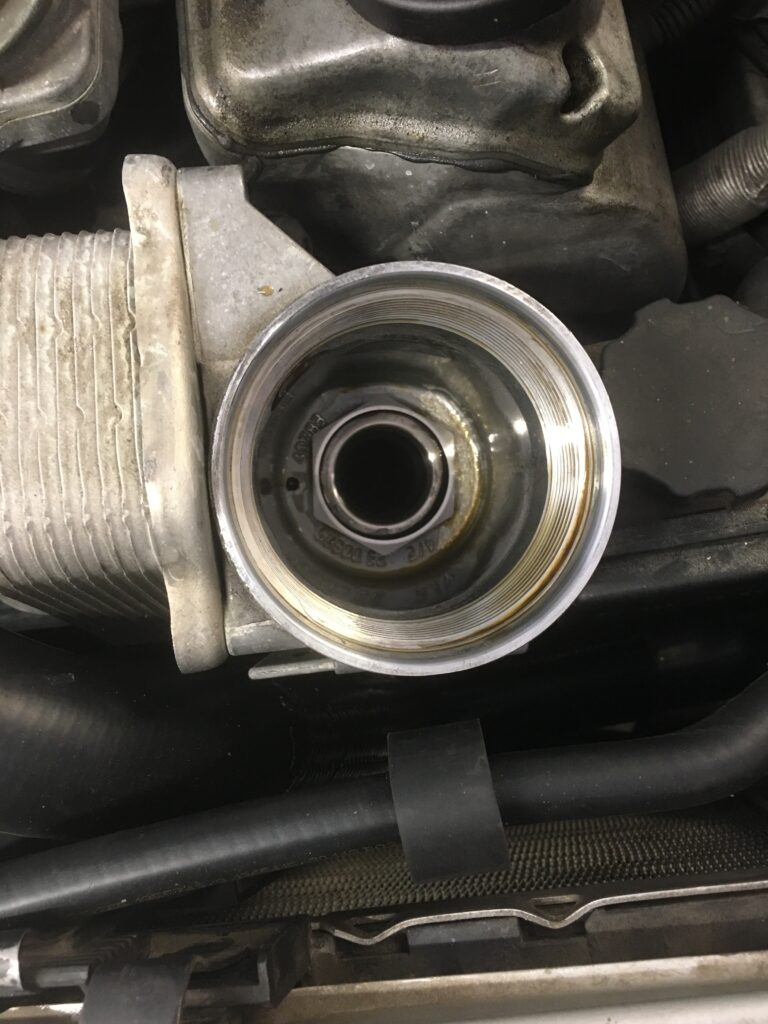
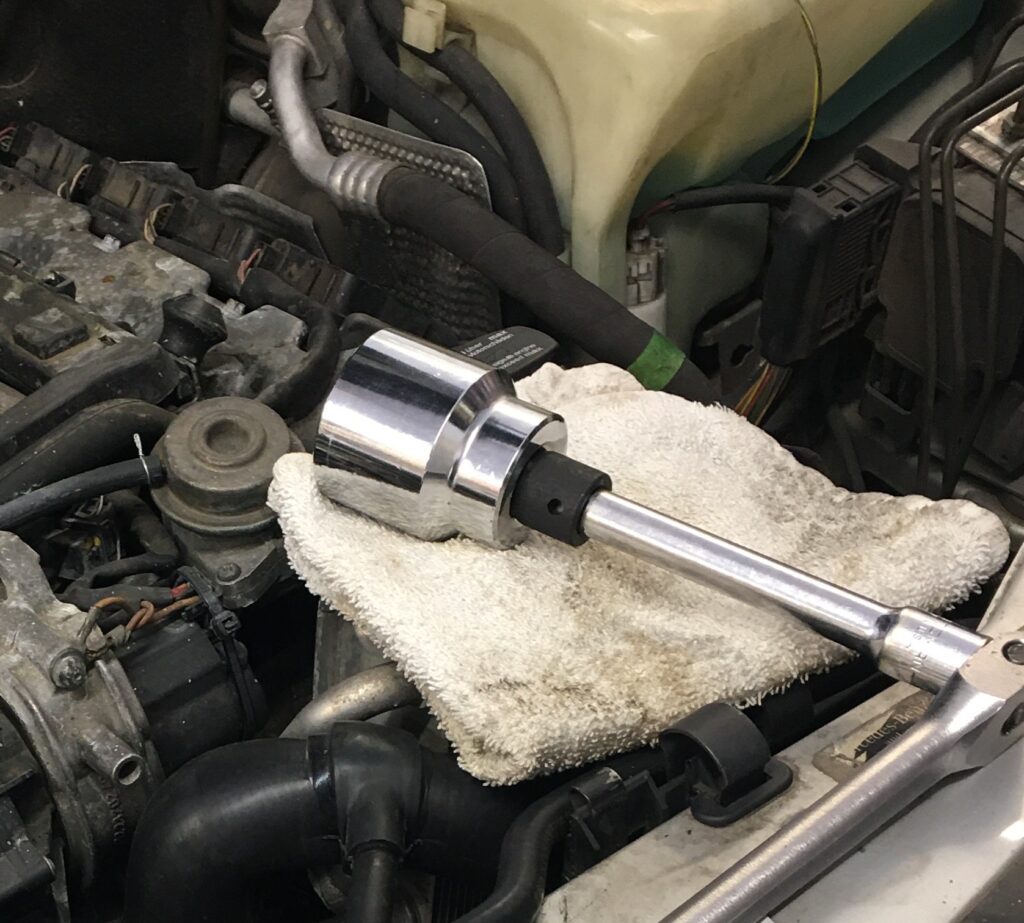
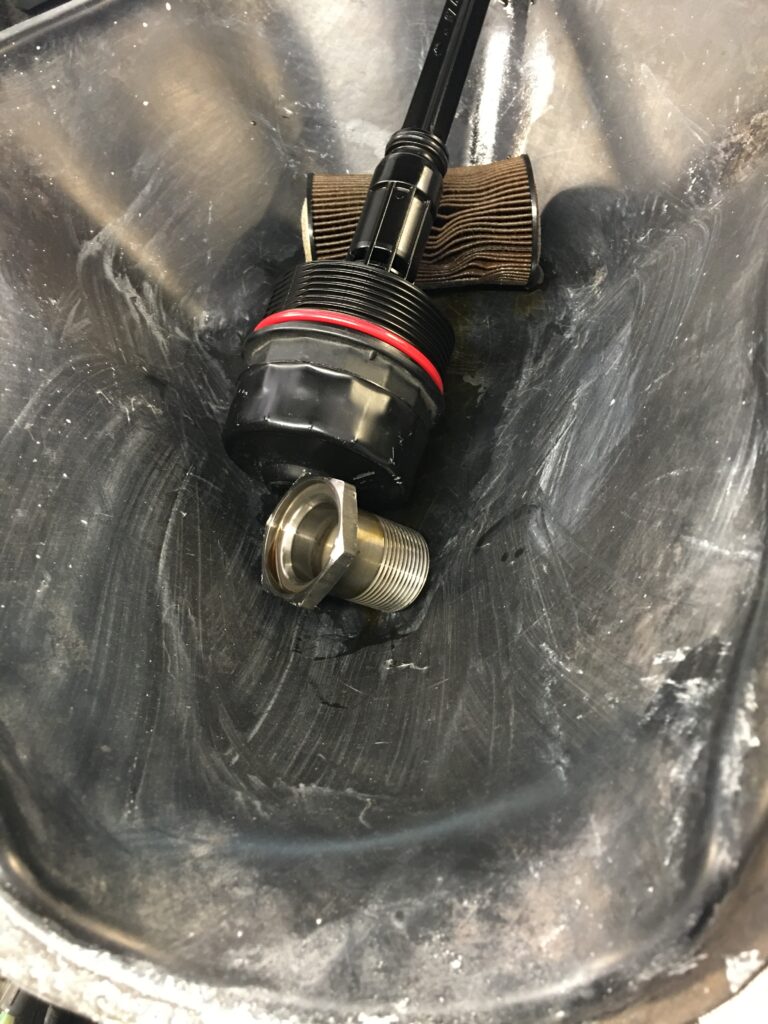
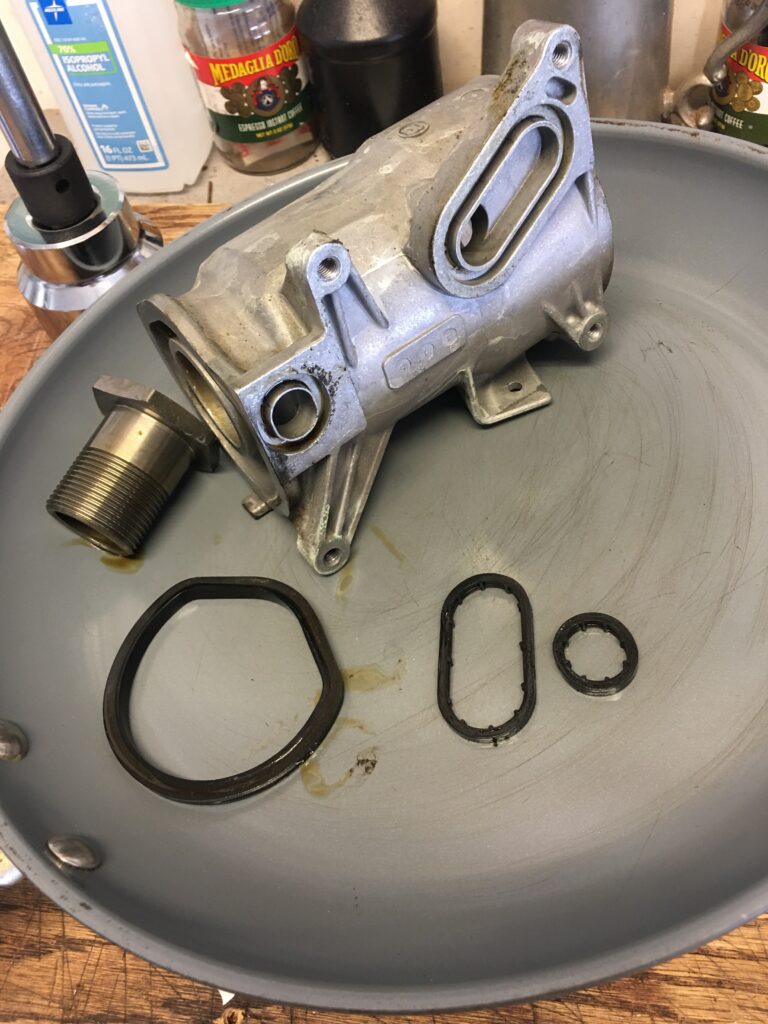
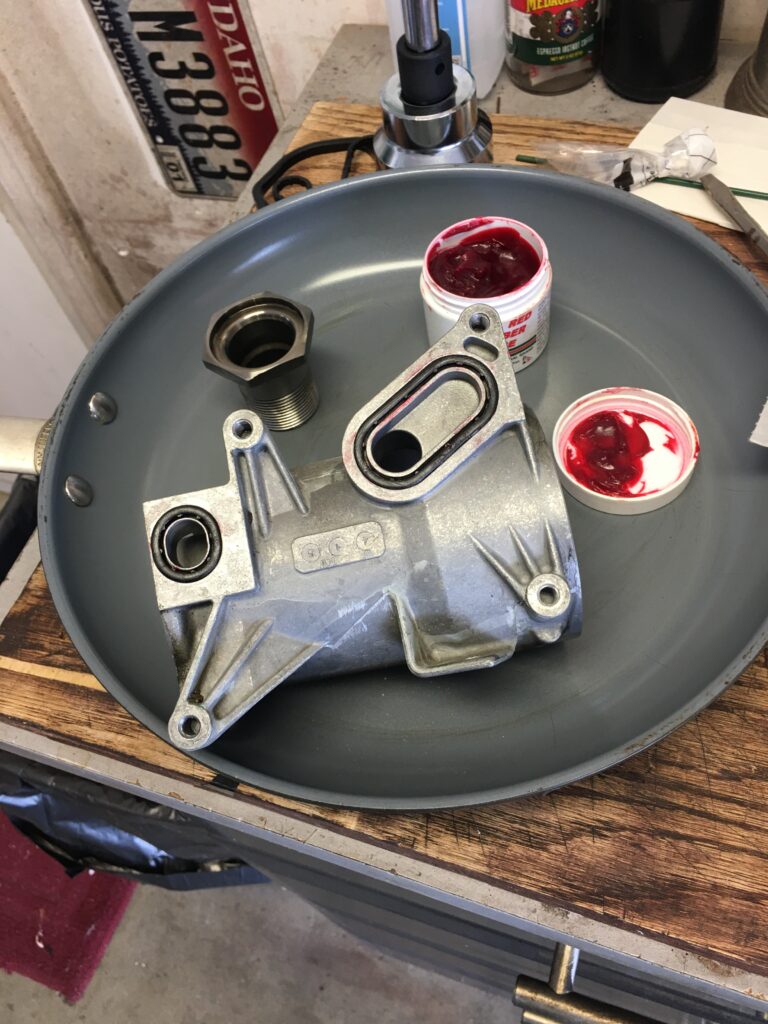
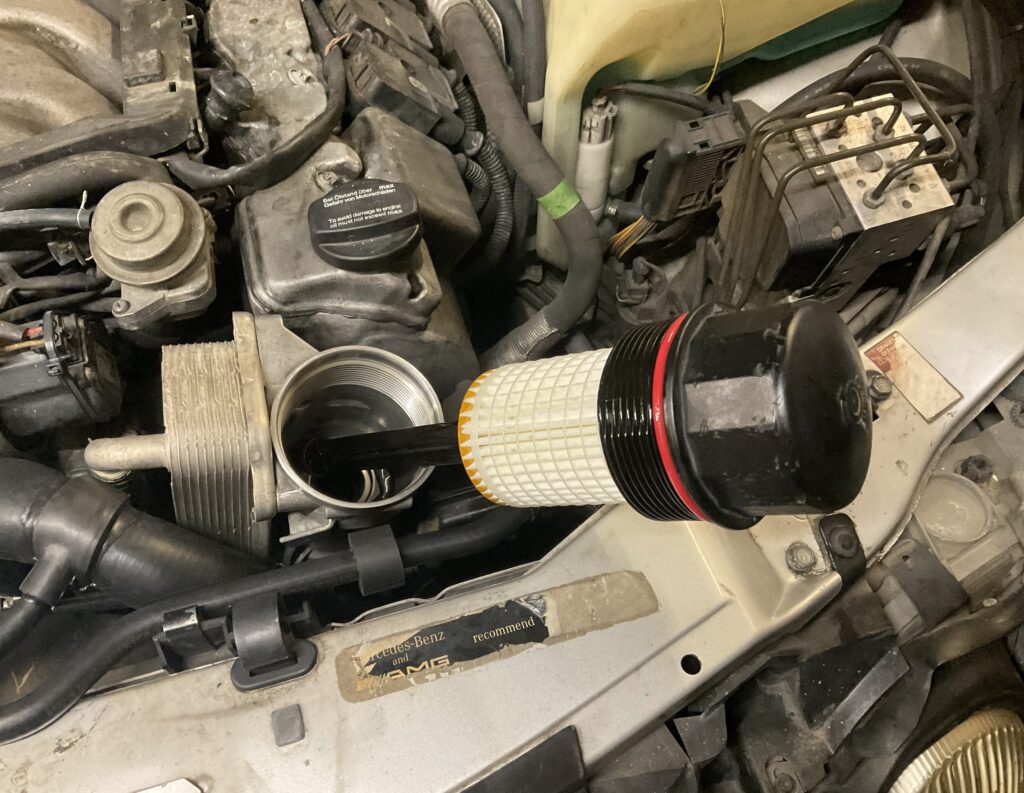
The yellow arrow points to the oil filter housing, which needed to be removed. I feared the worst, but found that it is a simple job. There are two rubber seals between the filter housing and the finned oil cooler, attached with four bolts removed with a T30 socket. The filter housing also has upper and lower halves, with a rubber seal between them. These are held together with a large hollow “bolt” that requires a 46 mm socket for removal.
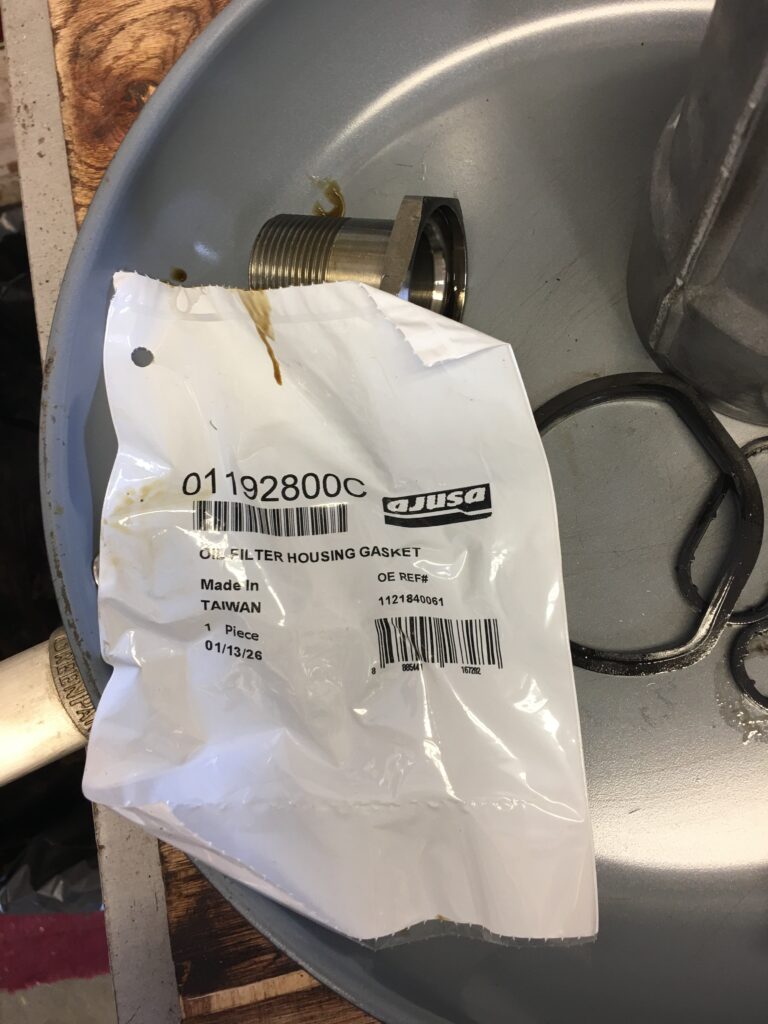
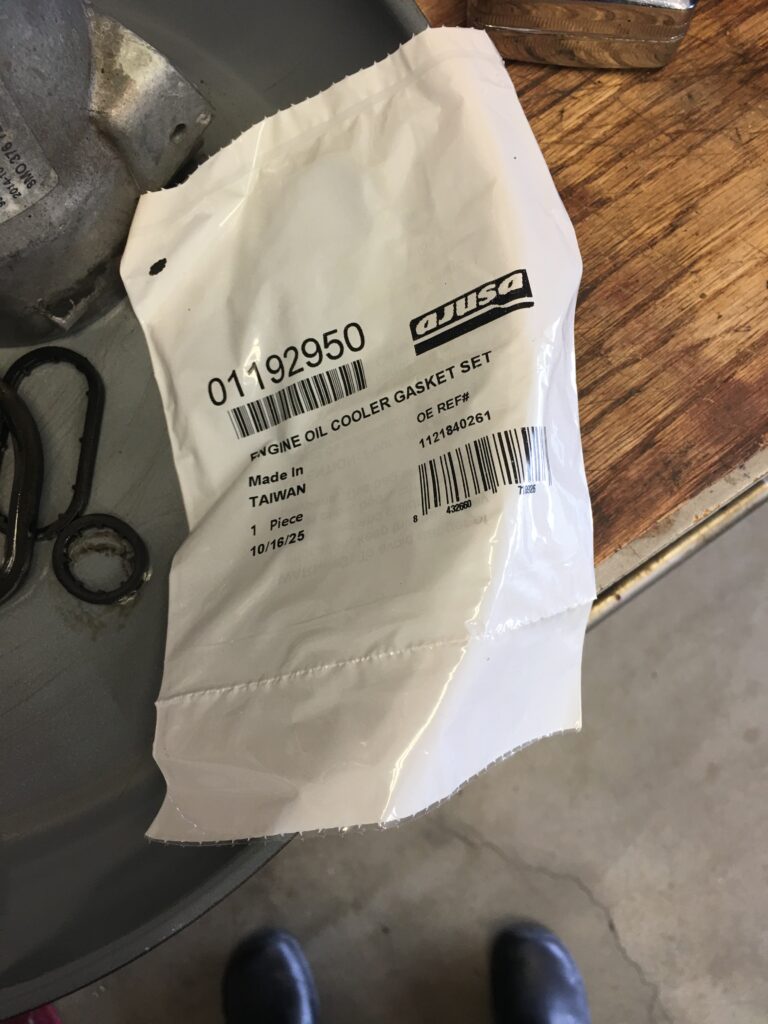
Four T30 socket bolts hold this cooler to the filter housingThis bolt gives the most grief, tight space for a ratchet down thereThat one!At bottom of housing, the 46 mm “bolt”I used a 1 13/16″ socket, which set me back $20 at Tractor SupplyThe torque spec is around 50 lb/ft, but it took two pulling on a 3 foot lever to break it loose. Old flattened, hard rubber sealsFound the seals online at AutozoneBottom seal lubed and in placeDitto for the two seals between housing and coolerNew filter going in, job nearly finishedAll buttoned up. After a couple long drives, not a drop of oil under the car!
When I first spotted the oil, I was tempted to donate the car to charity. However, what I feared would be a time consuming, difficult, and expensive repair turned out to be simple and straightforward.
I am an advocate of AI for help diagnosing car issues but ChatGPT was a bit off with this repair. First it insisted that I could replace the oil level sensor without removing the oil pan, telling me that it was removed from bottom of the pan, held by 3 bolts. NOT!
And then it was pretty clueless about the 46 mm bolt securing the upper half of the filter housing to the lower half that bolts to the engine block. By providing photos and working through it, I’m hoping it got a little smarter.
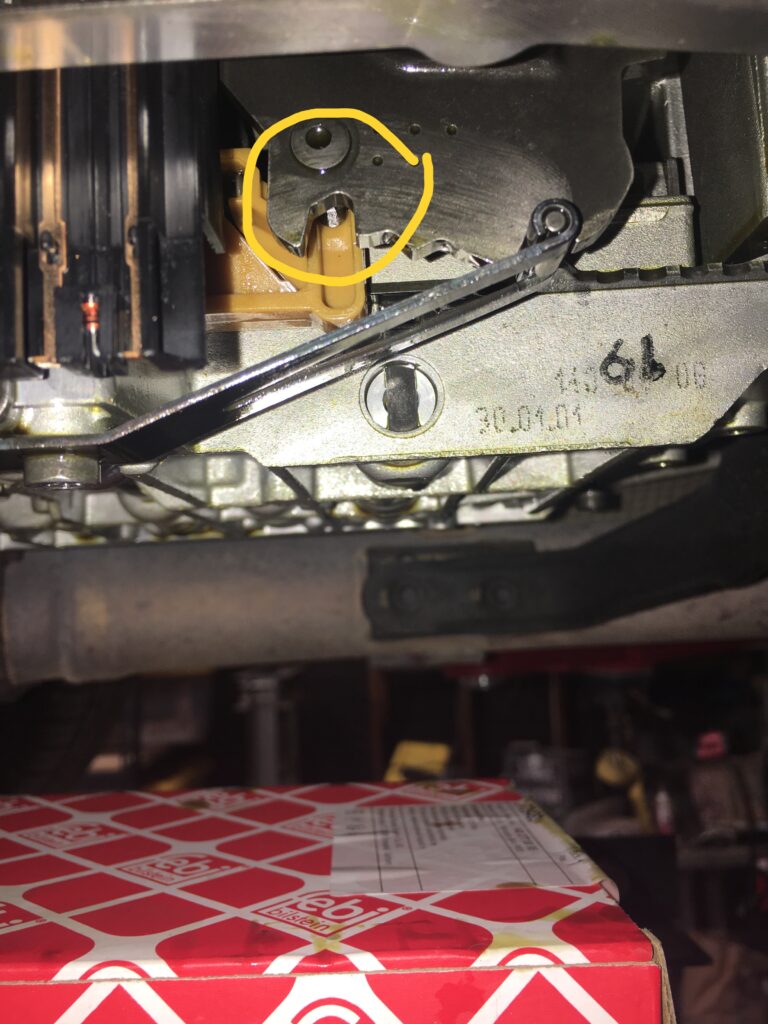
No plastic plate secured with 3 bolts down hereThis is the oil level sensor, not critical, but annoyingSeen here roughly above the drain plug, it’s accessed after removing the oil pan
Next up, in a few thousand miles, replacing that oil level sensor. And then… fixing the ABS/ESP/BAS fault, which means having the pump rebuilt.
My 2001 Mercedes CLK coupe went into “limp home” mode on a couple recent drives, fortunately just a couple blocks from home each time, stuck in third gear. After the first instance, the car stayed parked in the garage for a day. Full of optimism I took it for another drive, but it limped home again. I was fairly certain that the problem was in the transmission conductor plate, but to be sure I wanted to scan the TCM module.
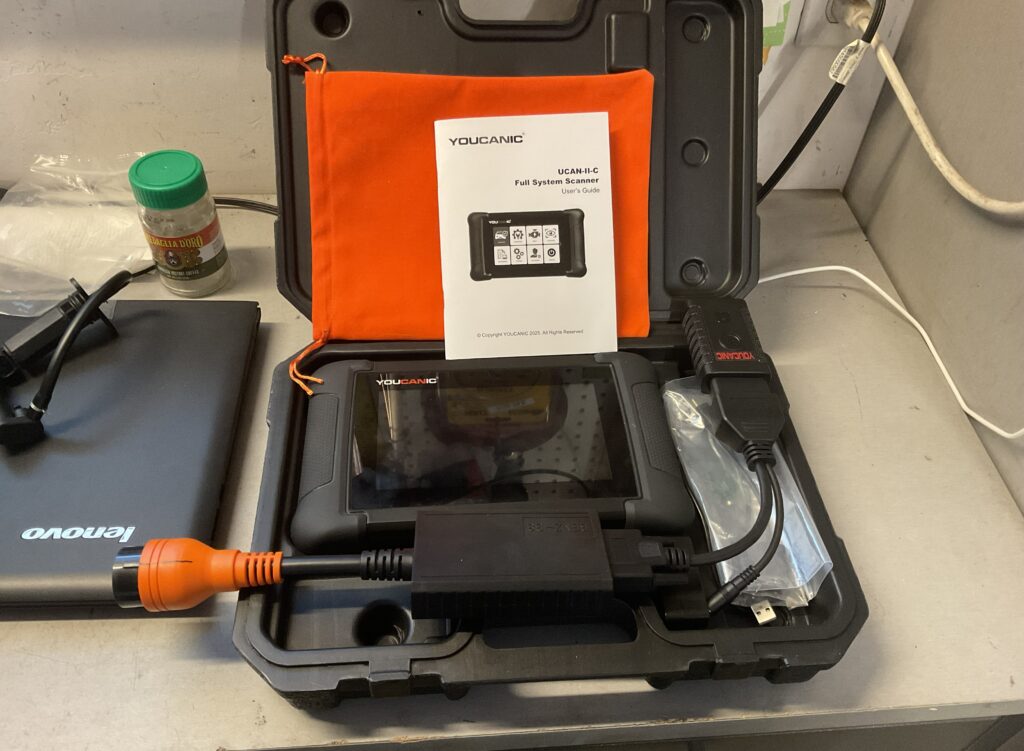
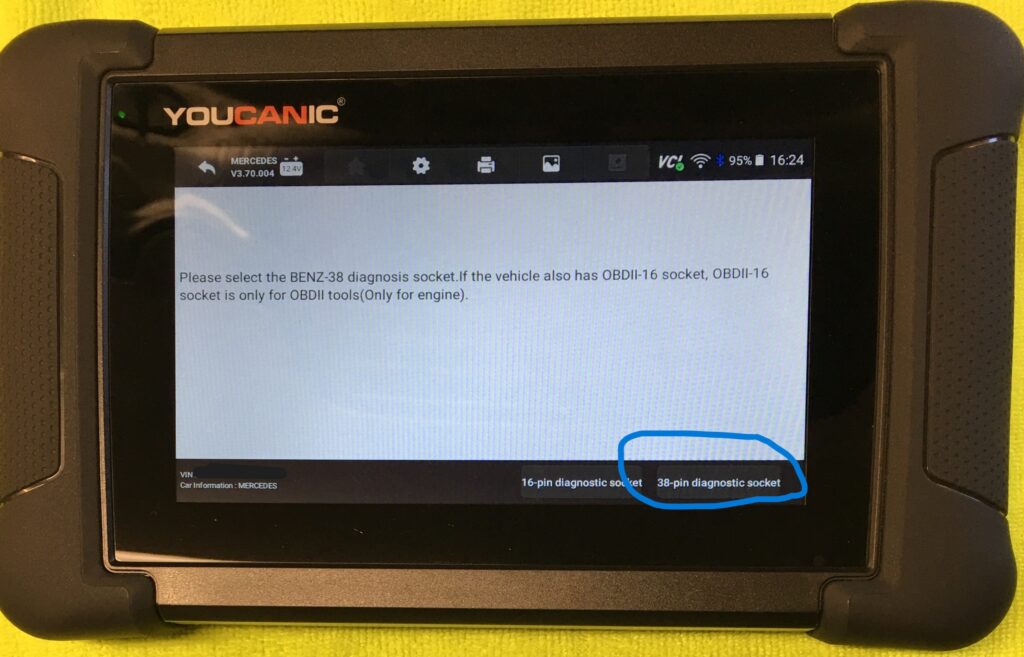
Youcanic scanner with the 38 pin Mercedes accessory
For many Mercedes cars from 1994 to 2002 this meant hooking up to the 38 pin connector. After checking with a local independent Euro car shop and being quoted $200 to have all the modules read, I decided to purchase the Youcanic UCAN-II-C, plus their 38 pin Mercedes adapter. I purchased an “open box” unit directly from Youcanic for $370, plus $30 for the adapter.
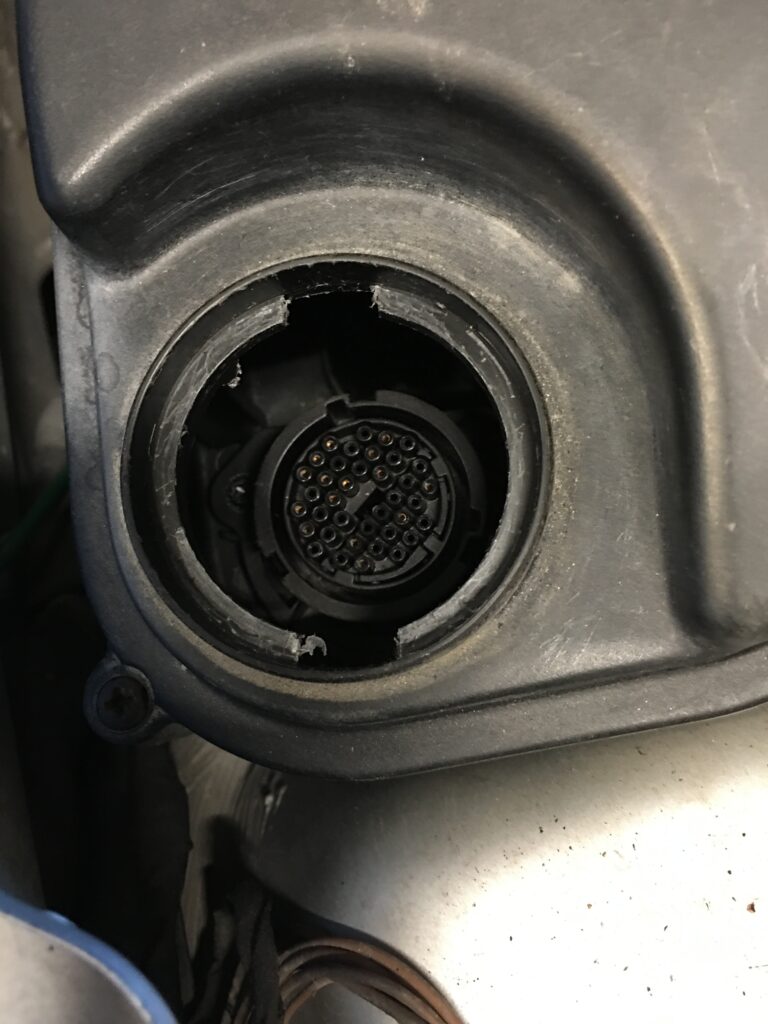
UCAN with adapter at topThe 38 pin plugLocated here on the CLKThe green light means it is communicating with the UCAN
The scanner is Wi-Fi and Bluetooth capable, which has worked flawlessly, allowing access to my home network which facilitated printing or emailing reports directly from the UCAN. After I added the Mercedes by entering the VIN, I scanned all the modules and the UCAN confirmed what was suspected… very likely the conductor plate sitting atop the valve body was the culprit. That same independent repair shop estimated $2,000 for the fix. NOPE. I can do this.
UCAN main screenHere is the key piece of the puzzle, allowing me to confirm the diagnosisP2101 was the DTC and this was ChatGPT about it
It is possible that simply replacing the connector that plugs into the 722.6 Tiptronic transmission would have fixed my problems, for a fraction of what I paid for the conductor plate kit and fluid. And ChatGPT provided a detailed method for testing it. However, with all those miles on my CLK I decided to purchase the kit. I went to AutohausAZ for the Febi kit and seven liters of Fuchs Titan 4134 ATF, which set me back $355 and change.
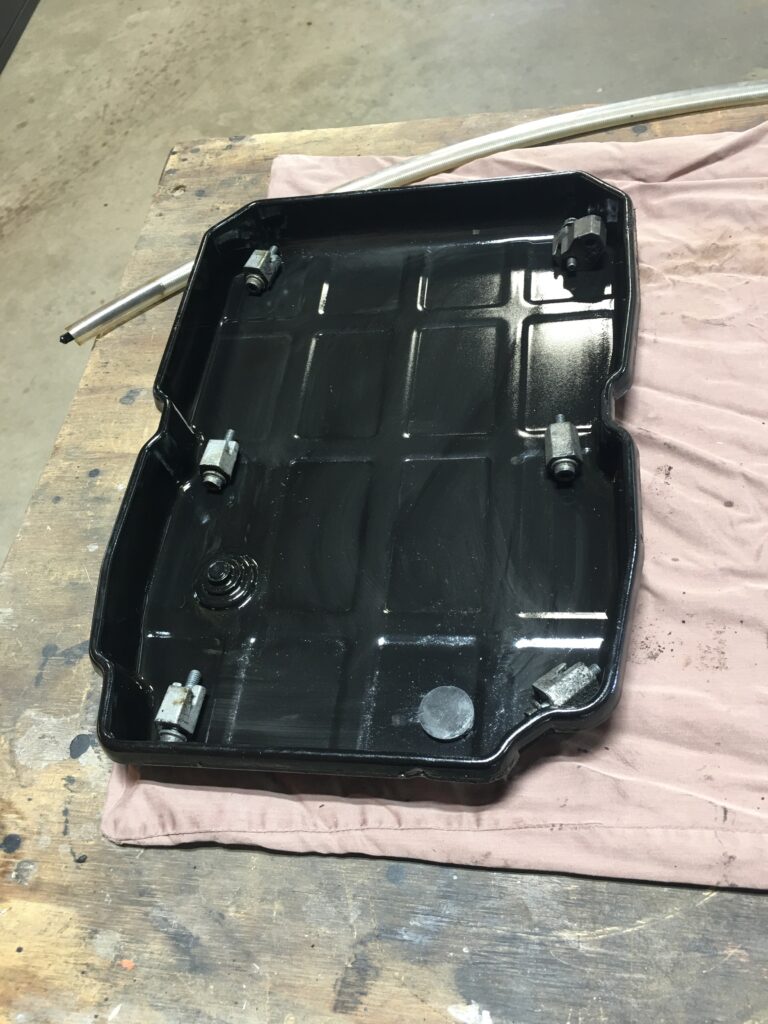
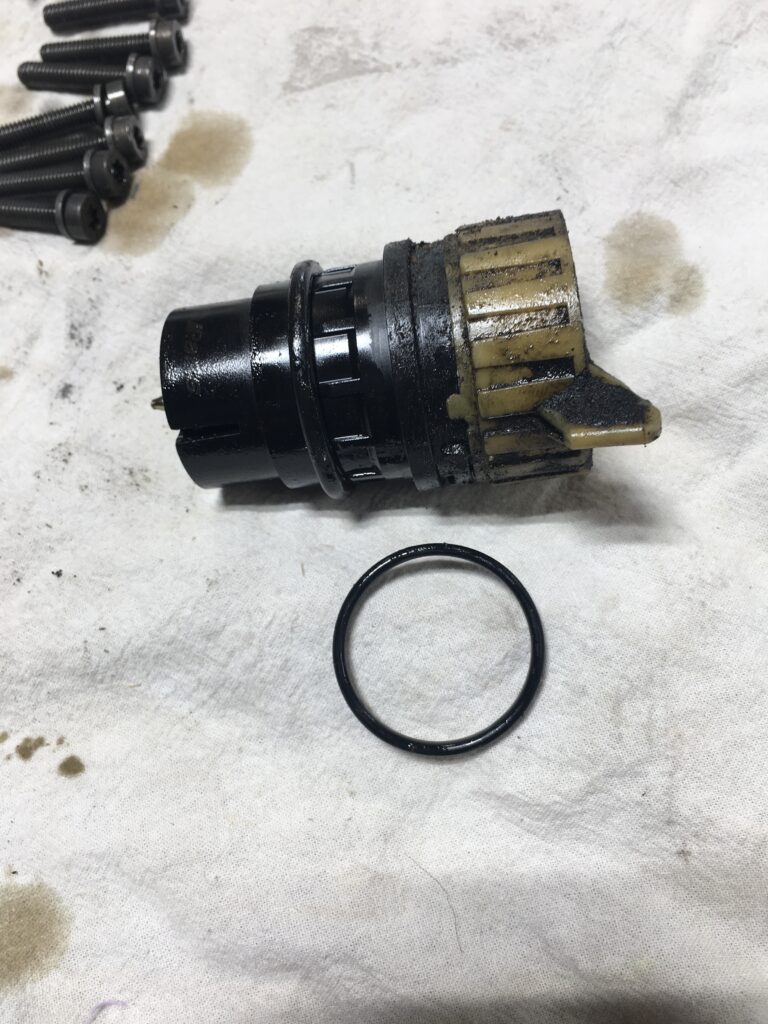
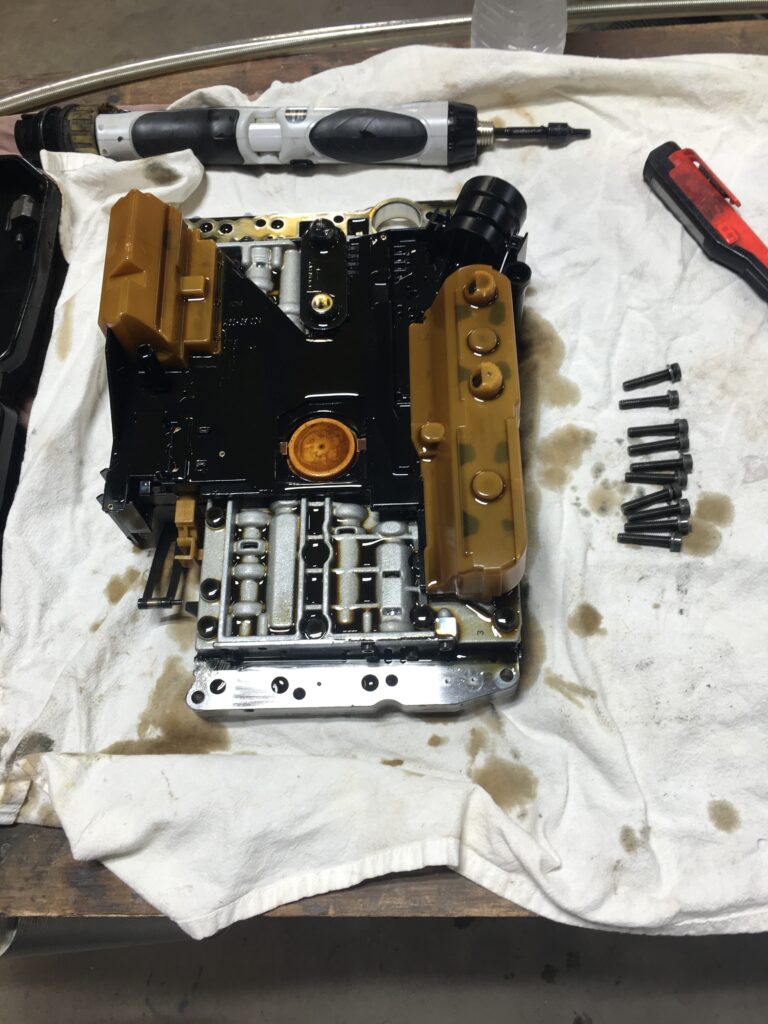
Out with the old ATFPan cleaned up, magnet in lower right.Remove the connector’s 7 mm bolt, using a wobbly extension.The oil covering the connector tells the story… leaking o-ring equals faulty electrical connection to the transmissionThe valve body and conductor plate on the bench
The Barn has a two post lift, which made the job much more comfortable. It is not a difficult job, just a bit messy with the fluid. Have your bag of kitty litter handy to soak it all up. I recommend letting the car cool down before diving into the job, since the exhaust and the transmission itself can be uncomfortably hot. If I had to do the job a second time, with the advantage of the lift and the experience, I’m guessing I could do it inside 90 minutes once the car is positioned.
Arrow indicates front of vehicle, the blue marks show the ten bolts that fasten the valve body to the transmissionSince I was solo on this job, I used our trans jack to hoist the valve body. The box was used to support the valve body while I started a couple bolts Not only is the valve body assembly a bit heavy, using the transmission jack let me make sure that the shifter linkage was positioned correctly.
WARNINGS:
The torque spec for the pan attaching bolts was something like 71 inch/pounds. I proceeded to do it in stages and when I torqued to 40 inch/pounds one of the bolts stripped! Fortunately I found a slightly longer bolt of the same spec and was able to put a nut on it, as the holes go all the way through the transmission flange.
When I finished the job and lowered the car, a warning light began blinking – in my brain. At the start of the job I opened the trunk and disconnected the ground from the battery. THEN I SHUT THE TRUNK… don’t do that! Panic set in because the last time I was in this situation (dead battery, trunk closed, utterly useless physical key in the fob) I had to crawl into the trunk and disassemble the latch. This time, being a couple years older and smarter, I hooked a battery charger up to the charging connections under the hood, set the charger on something like 45 amp/start setting and my key fob trunk button worked! Phew.
Last caveat… when I refilled the transmission, I added 4 liters of ATF per instructions. I thought I had a reading on the dipstick – yes that long snaky one – that indicated fluid level was fine. However, on the following day it did the limp home mode, stuck in 2nd gear. After letting the car sit for an hour while I visited my doctor, I made it home with the transmission working like it should. I investigated.
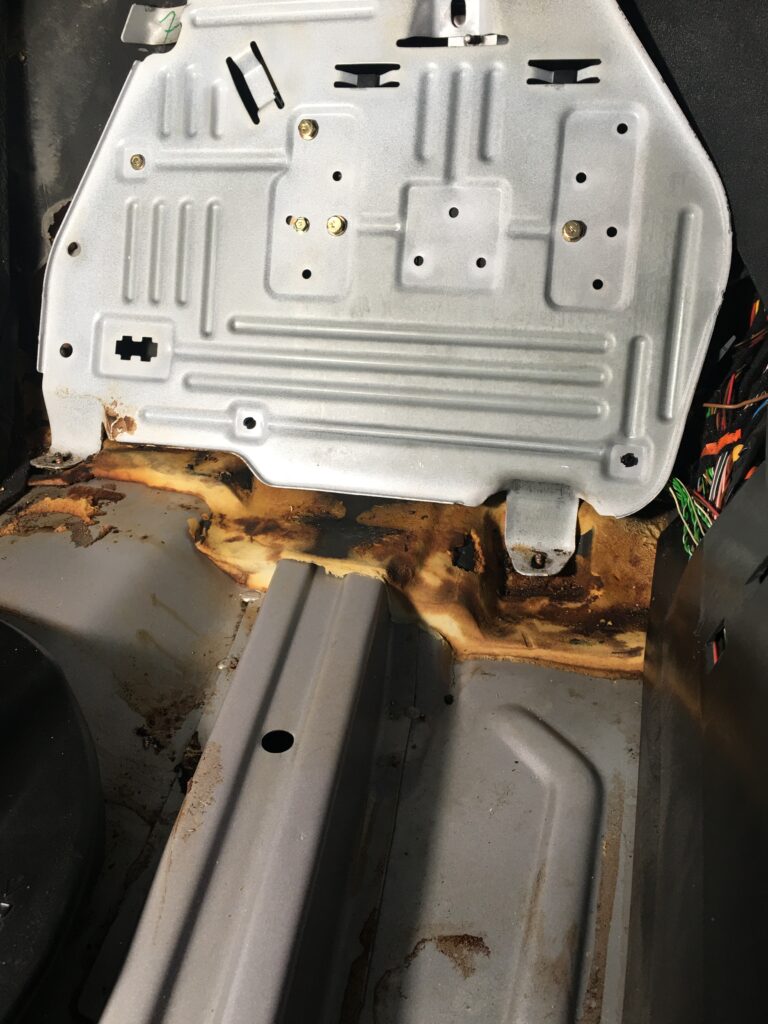
Under the passenger footwell carpetThe TCM is on the right.The CLK55 AMG transmission control module
There was advice out there suggesting that perhaps the fluid leaking past the failed o-ring on the connector at the transmission had wicked up to the connector at the TCM. But it was dry as a bone.
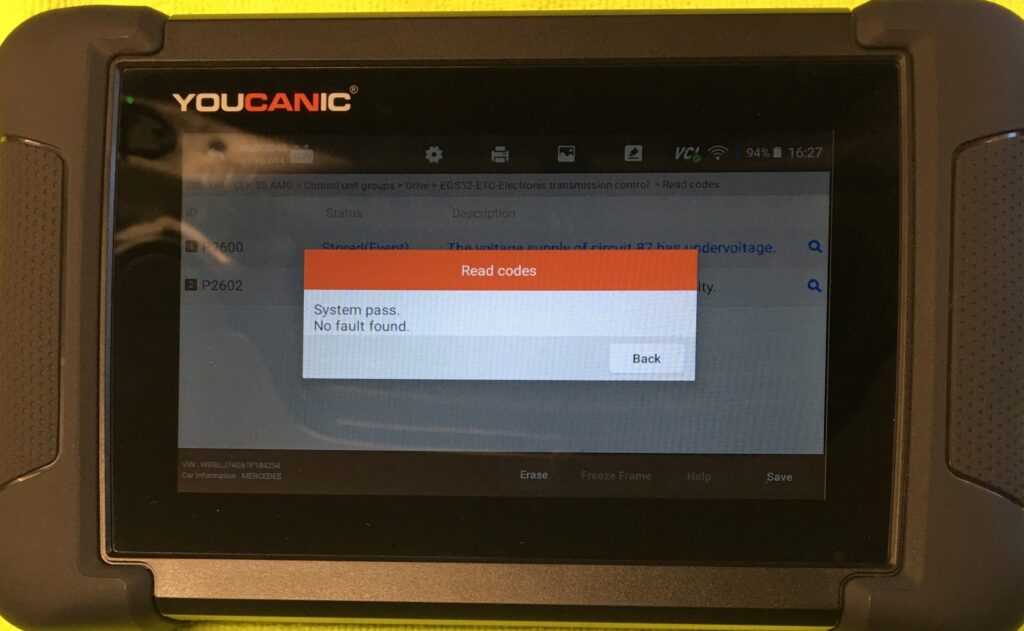
I decided to check the fluid level again. Warmed up to 80 degrees C, shifted through the gears while idling in the garage, then a short drive around the neighborhood, and back to the garage to measure again. I was at least 1.5 liters low. With great(er) care I filled to the mark. Took it for a long drive and then I hooked up the UCAN scanner, cleared the codes, read the transmission module again and success!
Since then the CLK has been flawless. It’s showing 185,000 miles on the odometer, short of my quarter million milestone, and with my limited driving these days, maybe the “next guy” will get there. It is such a great car… gentleman’s hotrod from an era when the technology was just about right, for me.
At job conclusion, this is what I was hoping to see!On the road again