Sources of information
How do we find out who a political candidate really is? We can follow the money, examine who is financing the campaign, compare the candidate’s public statements with voting records, and look beyond campaign advertising to see what the candidate has actually said and done.
THE MONEY
Find out who is backing the candidates
Federal Election Commission campaign-finance database — the primary source
This should be the foundation. The FEC lets you search every Senate candidate, the candidate’s authorized committee, contributions received, PAC contributions, and—particularly important for our purposes—independent expenditures supporting or opposing that candidate.

Issue One — particularly good for the dark-money layer
This is becoming especially useful in this election cycle. Issue One is already tracing 2026 money flowing from nonprofits into the major congressional super PACs.

OpenSecrets — best first-pass analytical source
Utilize this as your initial lens to pinpoint major contributors, key industrial sectors, and independent groups; subsequently, pivot to raw FEC records to substantiate the specific financial movements.
THE CANDIDATES
Who are these people, what they have said, and what they have done?
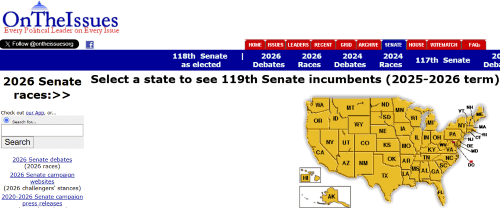
OnTheIssues.org — 2026 Senate races
It has already assembled a 2026 Senate section, organized by state and candidate. More importantly, it collects statements by issue from campaign websites, press releases, debates, interviews and previous public statements. It preserves dated quotations, which helps you track changes in a candidate’s position.
Ballotpedia is a good starting point for biographical information: age, education, occupation, previous offices, electoral history, endorsements and campaign information.
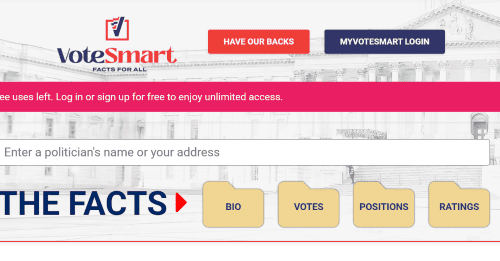
Vote Smart is especially valuable for candidates who have previously held public office because it combines biography, issue positions, ratings by interest groups, public statements and voting records.
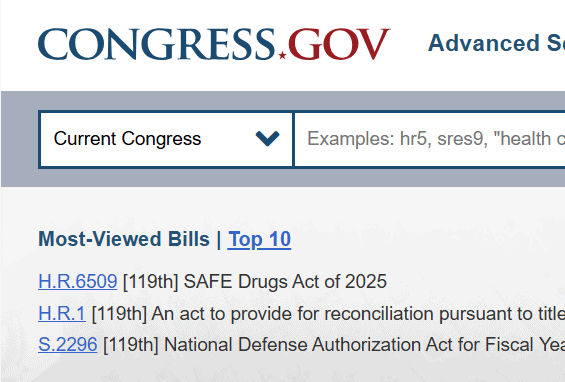
Congress.gov gives us legislation sponsored and cosponsored, roll-call information and congressional activity.

For senators, U.S. Senate roll-call votes gives us the actual voting record.

For representatives running for Senate, U.S. House roll-call votes does the same.
That gives us something measurable.
For very recent issues, add contemporary news searches
This is necessary because the databases inevitably lag behind events.
So for rapidly developing subjects, search AP, Reuters, local newspapers, television interviews, debate transcripts and the candidates’ own statements rather than depending entirely upon Ballotpedia or OnTheIssues.
I like the FEC site, getting more comfortable with all of them, but I have not focused on any candidates. I will probably look more to the money part of the equation. The “independent” money spend will be ramping up from now until election day.