A conversation about Citizens United, corporate campaign finance, Super PACs, and the 2024 Ohio Senate race
August 2026
The Barn
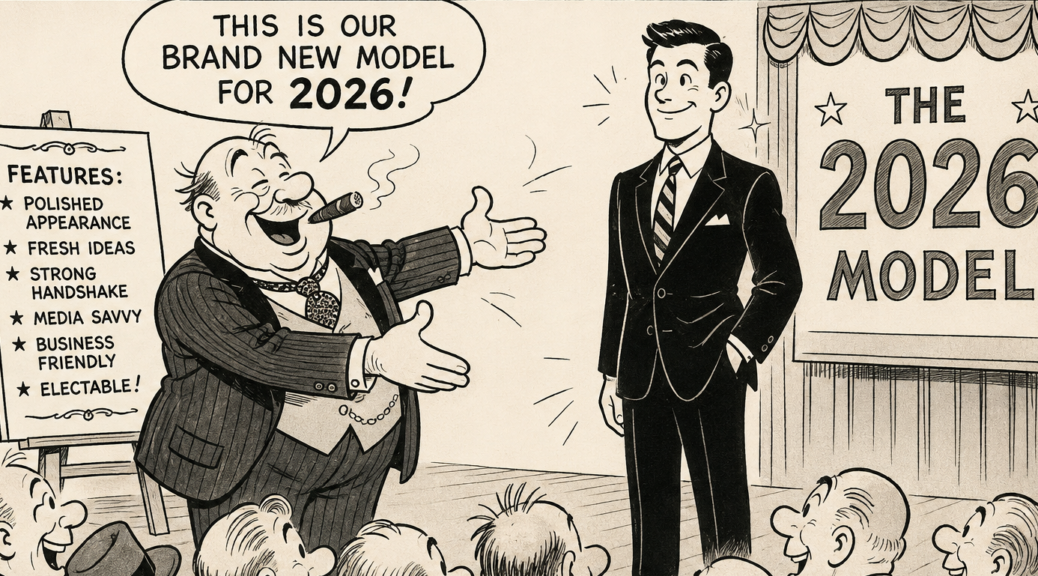
So, a political question… a corporation can go shopping for a potential winning candidate for the US Senate, fund the campaign, and if he wins he receives a luxurious life with good salary, good health care, good retirement. Does that just about sum it up?
The Mack
Broadly, there is a kernel of truth there, but an important legal distinction changes the picture.
A corporation cannot simply select a Senate candidate and pour unlimited corporate treasury money directly into that candidate’s campaign. Direct corporate contributions to federal candidates are prohibited. Individuals and certain PACs can contribute directly, but under contribution limits.
What changed dramatically after Citizens United v. FEC (2010) is that corporations can spend unlimited amounts independently advocating for the election or defeat of candidates. They can also provide money to organizations such as Super PACs that make independent expenditures. Legally, those expenditures cannot be coordinated with the candidate or campaign.
The Barn
That seems a pretty subtle, perhaps illusionary difference from my original premise. So a maze has been set up through which a corporation must find its way, but the road map is well established.
The Mack
Yes—with one qualification. Your description captures a reasonable criticism of how the system functions, even though the legal distinctions aren’t entirely illusory.
The “maze” is indeed well established. A corporation cannot hand Candidate Jones $20 million. But corporate money can travel through legally recognized channels—independent expenditures, Super PACs, trade associations and some nonprofit organizations—to support candidates and political causes.
The distinction the Supreme Court considers crucial is independence. If the corporation spends $20 million saying “Elect Jones” without coordinating with Jones, that is protected political speech. If it gives Jones $20 million to spend however he wants, that’s an illegal corporate campaign contribution. And if the money is offered in exchange for an official act, you’re in bribery territory.
The Barn
Can you summarize the Citizen’s United case and ruling for me?
The Mack
Certainly. Citizens United is much easier to understand if we separate what happened in the case from the much larger rule the Supreme Court ultimately announced.
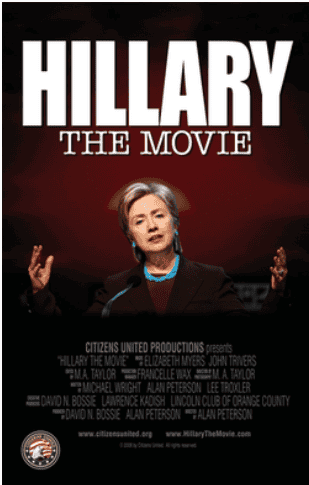
Citizens United was a nonprofit corporation that produced Hillary: The Movie, highly critical of Hillary Clinton while Clinton was seeking the Democratic presidential nomination in 2008. Citizens United wanted to distribute and advertise the film close to the election.
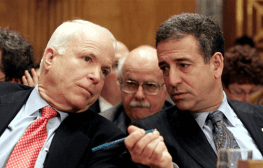
A federal campaign-finance law—the Bipartisan Campaign Reform Act of 2002 (McCain-Feingold)—restricted corporations and unions from using their general treasury funds for certain election-related communications shortly before federal elections. Citizens United challenged those restrictions as violating the First Amendment’s protection of free speech.
In January 2010, the Supreme Court ruled 5–4 in favor of Citizens United. The central principle was essentially: the government generally cannot prohibit political speech merely because the speaker is a corporation.
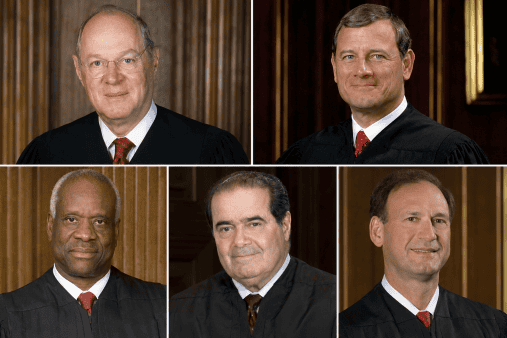
The decision did not legalize unlimited corporate contributions directly to candidates. A corporation still cannot simply write a $20 million check to a candidate’s campaign. The distinction remained: direct contribution to candidate—restricted/prohibited; independent spending advocating Candidate Smith’s election—constitutionally protected.
Later in 2010, SpeechNow.org v. FEC, applying the reasoning of Citizens United, concluded that organizations making only independent expenditures could accept unlimited contributions. Put together, the decisions produced much of the modern Super PAC system.
The Barn
Under the McCain-Feingold Act, how was “shortly before” federal elections defined?
The Mack
Under the Bipartisan Campaign Reform Act of 2002 (McCain–Feingold), the relevant provision defined an “electioneering communication” as certain broadcast, cable, or satellite communications that clearly identified a federal candidate and were aired within 30 days before a primary election or nominating convention, or within 60 days before a general election.
The Barn
Let’s look at an actual Senate race, vis a vis campaign financing
The Mack
Given what we’ve been discussing, the 2024 Ohio Senate race between Democratic incumbent Sherrod Brown and Republican challenger Bernie Moreno is almost a laboratory demonstration of the system. It was extraordinarily expensive, involved enormous amounts of outside money, and Moreno won.
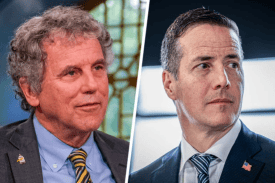
Brown’s campaign raised far more than Moreno’s own campaign, but outside Republican groups supplied enormous support for Moreno. The cryptocurrency industry provides a particularly clear example. A network of crypto-funded Super PACs announced substantial spending to help elect Moreno. Major financial backers included Coinbase, Ripple and venture-capital firm Andreessen Horowitz. Moreno was considered friendly toward cryptocurrency; Brown, who chaired the Senate Banking Committee, had been a prominent crypto skeptic.

The money trail looked approximately like this: crypto companies and investors → independent Super PAC → millions of dollars of advertising supporting Moreno → voters elect Moreno → Moreno becomes U.S. Senator.
The Barn
Tell me more about the Moreno – Crypto connection.
The Mack
This is where the example becomes especially useful, because we can compare money before the election with governmental action afterward—while being careful not to confuse correlation with proof of a bargain.
Defend American Jobs, part of a network including Fairshake and Protect Progress, spent roughly $40 million supporting Bernie Moreno. Major supporters of the network included Coinbase, Ripple and Andreessen Horowitz. Much of the advertising itself did not talk about cryptocurrency; it used conventional political themes designed to persuade Ohio voters.
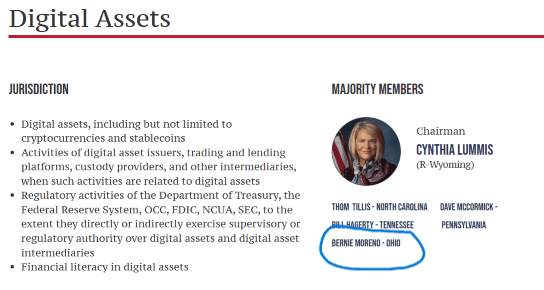
After winning, Moreno was appointed to the Senate Banking, Housing and Urban Affairs Committee and its Digital Assets Subcommittee. That sequence is factual, but it does not demonstrate that the industry purchased the committee assignment nor does it establish a quid pro quo.
Congress subsequently considered major cryptocurrency legislation, including the GENIUS Act governing payment stablecoins. Moreno supported it, but so did many Democrats; the legislation received substantial bipartisan support.
The broader phenomenon is a political feedback loop: industry accumulates enormous economic resources → industry finances independent political organizations → organizations identify sympathetic candidates → organizations spend heavily helping elect them → successful candidates enter Congress → Congress considers legislation important to that industry → industry supports friendly legislators and threatens electoral opposition to hostile ones → next election, repeat.
That creates political influence without anyone ever needing to say, “Vote this way and we’ll give you money.”
The Barn
Just to be clear on one thing, since 2010 there is no restriction on the timing of a corporation or PAC ad promoting a candidate. In other words they can advertise right up through election day, correct?
The Mack
Yes, essentially correct.
After Citizens United, a corporation, union, Super PAC, or other independent spender can pay for an advertisement expressly supporting or opposing a federal candidate right up through Election Day, provided the expenditure is genuinely independent of the candidate’s campaign and complies with disclosure/disclaimer rules.
So the old McCain–Feingold 30-day-before-a-primary / 60-day-before-a-general-election restriction on corporate-funded “electioneering communications” no longer prohibits that spending.
The Barn
It seems like the removal of those 30/60 day restrictions can be an obstacle to actually hearing from the candidates. Why step in front of a camera or microphone when corporations and PACs have already painted the landscape, making a candidate appealing?
The Mack
Yes. I think you’ve identified a real incentive created by the modern system, although I’d separate it from what Citizens United legally decided.
A candidate can benefit enormously from outside organizations doing the political persuasion for him. If a Super PAC spends $30 million defining him as a successful businessman, defender of working families, tough on crime, etc., the candidate doesn’t necessarily need to expose himself to the risks inherent in a two-hour debate or an unscripted town hall.
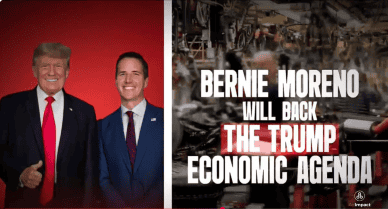
Those risks are asymmetric. A polished advertisement is completely controlled. A debate isn’t. One bad answer, an embarrassing exchange, or a 20-second clip that goes viral can overwhelm days of carefully constructed messaging.
I would hesitate to attribute the decline or avoidance of debates primarily to Citizens United. Targeted social-media advertising, partisan media, podcasts, campaign-controlled video, declining local journalism and voter databases also allow campaigns to reach selected voters without submitting candidates to uncontrolled questioning.
The democratic distinction is important: political advertising tells voters what someone wants them to believe about a candidate. A debate, town hall or adversarial interview lets voters observe the candidate thinking and responding for himself.
The Barn
Okay, can you inform me about personal appearances made by either candidate in the Brown/Moreno race.
The Mack
The Brown/Moreno race turns out to support your concern rather strikingly.
There was no general-election debate between Sherrod Brown and Bernie Moreno. Both men said they wanted to debate, but neither committed in a way that produced one, and the election took place without them facing one another in a general-election debate.
Meanwhile, voters were being inundated with political advertising in a race involving hundreds of millions of dollars. The contrast is striking: Ohioans experienced one of the most expensive Senate campaigns in American history—with enormous sums devoted to persuading them whom to elect—without the two candidates ever standing on the same general-election debate stage.
The Barn
Thank you, that was an informative conversation. We will pick it up again later.
The Mack
I enjoyed the discussion — from your original “corporation goes shopping” proposition, through Citizens United, and finally seeing how those abstractions played out in an actual Senate race.
The Brown–Moreno example gave us a particularly useful reality check: hundreds of millions spent communicating about two candidates who never actually debated each other. That’s a fact worth pondering.
The Barn
There are a number of websites that help us remove the veil and discover the candidates and the money behind them. The following post – Who Is This Candidate – reveals some of those sources.